Thoughts on Newsnight and the aversion of naming an abuser

Trigger warning: this post discusses rape and rape apologism

I watched Newsnight tonight. Word on Twitter was that it would be about a senior political figure who had raped children.

When I heard this, I admit I was frantically wracking my brains to work out who it was. I thought of several people who I most suspected. I thought of all the politicians I could who had engaged in rape apologism to my knowledge: they were the ones I suspected most, with their passionate defences of rape culture. (I’m really going to try hard not to libel anyone in this post, but I’m quite drunk). I’d heard whispers of names–was it going to be them? Who could it be?

Then I watched the segment. They were clearly going out of their way to avoid naming the abuser. All we learned was that it was a senior Tory politician. As I watched, though, I realised how largely irrelevant it was for me, an uninvolved member of the public, to know this rapist’s name.

We heard about what happened. We heard of abuse of vulnerable young people. We heard of how the police were uninterested in investigating what happened, even as the survivors tried to seek out justice through the channels that society is taught is proper. We heard how the rapist is a powerful man, surrounded by other powerful men to keep it quiet. We saw evidence of the fear of libel, how even as a survivor talked about what had happened to him, Newsnight would not name the rapist for fear of legal threat.

They didn’t have enough to name names, they said, even as a survivor talked openly about how as a culture we needed to move towards believing survivors. He was begging us to be believed. I believed him.

Yet in our culture, this is apparently not enough. Newsnight knew of the threat of libel, and thus opted not to name a man who had abused and raped young people, because the only evidence available was their word.

The word of a survivor is enough. It should be enough. It must be enough.

We live in a society where this word is not enough. It’s not valued. We have a legal system which protects perpetrators of rape and abuse by operating on this principle. It silences survivors by telling them their experience is not enough, by pretending that being accused of rape is the worst thing that can happen to a person, that it’s worse than being raped.

In a way, it doesn’t matter that we, as the uninvolved public, don’t know the name of the man who did these things, although it would be better if we did. It does matter, though, that survivors were brave enough to speak out, and if they wanted their rapist named, they should have been able to do this without the culture of silence surrounding them.

Our response to this must not be a game of “guess the paedo”, making it more about the perpetrator. We should–and must–criticise the system that would not allow a survivor’s wishes to be respected, repeatedly. But in this case, ultimately, what we as the public needed to know was the story presented to us, and to look between the lines at the continuing cultural cover-up which became slightly more visible. And what we need to do with that knowledge is fight to ensure that this cannot continue to happen.

The NetMums survey: how not to conduct a survey

I’ve been trying to ignore this, as frankly it’s utter bollocks but people keep sending it my way anyway.

Transparent knock-off of Mumsnet, who are creatively called Netmums, have produced survey data declaring feminism is dead. Predictably, the media have leapt on it and are masturbating frenziedly to the whole thing. Now, obviously feminism isn’t dead, unless there’s some sort of Halloween witchcraft keeping all the zombie discussions of the liberation of women from patriarchy going, so that’s a non-point in the first place.

Now, there are discussions to be had about the label of “feminist” and whether or not people want to wear it, but this definitely shouldn’t be hung off of the Netmums survey, for the simple fact that the Netmums survey doesn’t actually show us anything whatsoever, except how to conduct one a survey really poorly and then get it into all the papers, thus promoting your brand as better than those splitters at Mumsnet.

(for what it’s worth, I proudly wear the label feminist, but see why others are reticent because there’s some utter wankers who also call themselves feminists storming around being thoroughly wrong about everything)

To conduct a good survey, you need a good sample of people to conduct the survey on. You want people who are representative of the population: a spread of races, ages, class and so on, in a way that is roughly similar to how things are distributed in the real world. It’s also best to seek out people to participate in the survey rather than stick it online and see who volunteers to take part–this helps make your data more representative. This is why opinion polling services are often engaged to gauge public opinion.

Netmums had a pretty big response to their survey–1300 people took part. However, only Netmums members were surveyed. They literally have a “surveys” section of their website, where users can participate in surveys to win prizes. This is hardly a particularly representative sample of women in the UK, and therefore it comes as no surprise that the survey data revealed that “women” want the next struggle for social liberation to be “reinstating the value of motherhood”. If you ask these questions only to women on an internet forum centred around the identity of “mother”, of course they’re going to say this is one of the most pressing issues to them.

The next issue in developing a good survey is how the questions are asked. Ask a leading question, and you’ll get the answers you want. Rather unsurprisingly, Netmums didn’t bother linking to a full set of survey questions, so it’s pretty much impossible to discern what they were actually asking participants and the order in which the questions were asked.

The glimpses we get suggest that the questions weren’t particularly well thought-out, asking to what extent people agreed with various statements like “I would like a bit of old-fashioned chivalry”. There’s a particularly risible question where participants are asked “Which of these activities are acceptable for feminism”, listing a range of options which respondents presumably tick, including highlights, baking cupcakes and prostitution. For real. Firstly, “acceptable for feminism” is a pretty complicated and confusing way of phrasing the question, which would mean different things to different people. Secondly, these things are all lumped in together to guide responses: it’s really no wonder that so many “women” think that sex work is unacceptable, when they’re comparing it to wearing false nails.

So it’s a pretty shittily done survey, and you’ll be delighted to know their reporting of it isn’t any better. Please study the image below for an example of how horribly they fucked it up (description below, for those using screen-readers):

Note that the text next to the pie chart–of presumably the same questions–bears literally no relation to what’s outlined in the pie chart. Admittedly, it’s a crap pie-chart and the weird oblong shape makes it very difficult to discern percentages, but absolutely nowhere is anything that can be remotely construed as anyone agreeing with a statement about feminism saying it’s not about equality, and the percentages don’t seem to add up at all. I don’t know if there were more questions asked or if Netmums are literally pulling things out of their arse, but either way it’s a thoroughly disingenuous way of reporting data.

Also noteworthy is what they don’t draw attention to in the blurb next to the pie chart: the fact that more than half of the respondents have said they don’t identify as feminists because they don’t need the label.

It’s a smart tactic, though. They stick the shit they want people to see on the press release, highlight the bits they really want people to see, and hope nobody actually bothers looking at their data. And they usually don’t, because journalists are lazy and they will therefore just spew out whatever Netmums told them to say.

Ultimately, then, let’s forget this survey ever happened. It’s a crap survey which tells us nothing. I imagine it’ll rear its ugly head periodically, so consider this a public service explaining why this is something to which no attention whatsoever should be paid.

_

Image depicts text and a pie chart. The text reads:

<“If you don’t call yourself a ‘Feminist’ why is this?”

39% criticised old-fashion Feminism for being too divisive, claiming they ‘dont want to be equal – women are different to men and we should celebrate the differences.’

Almost a third (28%) think traditional radical Feminism is ‘too aggressive’ towards men while a quarter (24%) no longer view it as a positive label for women. One in five describe Feminism as ‘old fashioned’ and simply ‘not relevant’ to their generation.

In subsequent questions, 17% even claim Feminism has gone too far, oppressing men and ‘losing sight of the natural roles of men and women’.>

The pie chart consists of five slices. Moving clockwise from the top, the largest segment, comprising more than half is coloured blue and labelled “I can be strong without labelling myself. A beige segment equivalent to roughly 10% is labelled “I don’t feel it’s relevant any more”. A turquoise segment, also around 10% is labelled “It’s old-fashioned, it’s not really my generation”. An orange segment, also 10% is labelled ” It’s not a positive label any more”. A pink segment, slightly larger than 10%, is labelled “It’s a bit aggressive towards men whereas we need compromise”.

How to be better: on intersectionality, privilege and silencing

It’s been brewing for a while. The backlash is on, and this time it’s coming from inside what is nominally “our” camp. The problem? Some people, it seems, just don’t get intersectionality. They hate it when they’re called out on privilege, and they try their best to shut down or derail any of the discussions. It’s hard to work out where it started, but I think it’s something to do with the festival of rightful criticism thrown at Mehdi Hasan (thinks he has a right to peek into our uteruses) and Caitlin Moran (more on her later). Those with the double whammy of privilege and platform have all closed ranks, and entered onto the offensive.

First of all, we have Vagenda Magazine, a feminism-lite blog with a platform in the New Statesman. Vagenda today published a defence of Caitlin Moran. It wasn’t exactly a very good defence, as they completely neglected to explain why Moran was being criticised, which includes but is not limited to that awful, awful bookcasual transphobia, comparing gay men to sea monkeys, liberal use of words like “retard”, and, the latest offence, saying she “literally couldn’t give a shit” about representation of women of colour in the media. All of these actively contribute to the oppression of people. Some of these people will, inevitably, be women.

But no. Vagenda Magazine think it’s unfair to criticise Moran for this, because taking an intersectional approach to feminism is too hard. It’s too academic, apparently, and one could never go into a school and explain, Vagenda complains. Yes, they actually said that:

 Going into certain state comps and discussing the nuances of intersectionality isn’t going to have much dice if some of the teenage girls in the audience are pregnant, or hungry, or at risk of abuse (what are they going to do? Protect or feed themselves with theory? Women cannot dine on Greer alone.)

So much wrong with this sentence it’s hard to work out where to start. They’re repeating a tired old criticism which has always been levelled at feminism–that people won’t understand it and that it’s too academic. We all know that argument is bollocks. Vagenda have also managed to imply that young women at a state comprehensive are somehow too stupid to understand intersectional feminism, which is again patently bollocks.

The thing is, intersectionality is fairly intuitive when one experiences intersectional oppression. Things suck harder. I only learned the word for the fact that things suck harder when you’re not just a woman, but also black, or gay, or trans, or disabled, and so forth fairly recently. And it delighted me. I was glad there was a name for this phenomenon I’d noticed. I also only learned the word privilege fairly recently, and the word “cis”, and do you know what? Again, I was glad, because there was a word for these little things I felt that actually gave me a leg up in life.

It’s not difficult at all. In fact, one can think about a four-way junction (or, as the Americans call it, an intersection). One road is not being male. Another road is not being white. Another road is not being able-bodied. The last road is not being cis. Now, if you stand in the middle of any one of these roads, you’re going to be dodging traffic. But if you stand right in the middle of the junction, you have cars coming at you from four ways, and you’re going to have to do a fuckload more dodging than you would have if you were just in one road.

I don’t know if that’s why it’s called intersectionality, but if not, it should be.

Vagenda think we shouldn’t be too hard on Moran, though, because:

Caitlin Moran may not be perfect, but she has come closest thus far… Moran at least speaks a language that we all understand

If by “we”, they mean the privileged women with a national platform, then yes, they understand it. But not if you’re one of the groups Moran doesn’t give a shit about. At best, it’s dismissive. At worst, it’s actively oppressing others. I mean, fucking hell. Imagine if Jeremy Clarkson had said some of the shit Moran said. Imagine if David Cameron said it in a speech. We’d be rightly yelling at them, at best.

Vagenda didn’t like the criticism they received, though. They were dismissive, saying it was “the same clique of angry people“. They wanted me to shut the fuck up explaining intersectionality in under 140 characters, so said I should email them instead

Which brings me on to the other ghastly article about privilege I’ve seen this week. The Guardian ran a piece entitled “Online bullying–a new and ugly sport for liberal commentators“. What is this online bullying from liberals, you ask?

It’s publicly calling someone out for using problematic language or forgetting to check their privilege, apparently. Basically, the author thinks that we should always criticise for email rather than publicly, we shouldn’t be angry, and we should stop suggesting to put trigger warnings above potentially triggering material, because she’s trying really hard. Again, imagine for a second Jeremy Clarkson had written such an article. We’d be nailing his balls to a wall for such a tirade.

It’s ultimately a method of silencing criticism, of pointing out unchecked privilege. Now, bullying in my book has always involved someone exerting their power over another. And here’s a relatively privileged woman using a national platform to silence people who are levelling rightful criticism from those with less privilege. Not cool.

There’s good reason for criticism to be public. If the problem is public, why shouldn’t the criticism be public? While banging my head against the wall with Vagenda earlier, a fair few people saw my tweets and thanked me for explaining what intersectionality was in 14o characters or fewer. We all learn from one another, and criticism of something public can and should be public.

As for the tone policing, I’m always aghast when people don’t want to understand why others are angry. Guess what? Oppression is kind of infuriating. Furthermore, the anger often comes from frustration: from hitting a brick wall where a privileged person says “yeah, well I don’t see that so you’re wrong”. It’s OK to be angry. It’s natural to be angry. It’s not cool for privileged people to say you have no right to be angry.

I’m fucking furious, and proud.

Ultimately, I don’t get why some people don’t want to hear criticism. There is a huge difference between criticism and personal attacks, between criticism and misogyny. Criticism, if we learn to embrace it, makes us stronger. It is not the job of others to check our privilege for us, but it’s our own, so it’s, frankly, a fucking favour when people call us out on it. And if we listen and engage, it will make us all the better.

And what does that entail? It’s actually fairly simple. It involves a willingness to learn–not to say you don’t give a shit about something you don’t know about, but to want to learn about. It involves thinking about your own privilege, watching your own language, and not getting pissed off at others when you slip up. It involves knowing when to shut the fuck up.

Yes, we all fuck up, and nobody’s perfect, but embrace that criticism and learn from it and it will make you a better person.

Sometimes it’s hard to confront your own privilege, particularly when your life sucks because of one form of oppression you experience. But know that there are other forms of oppression that you are lucky not to have a fucking clue what the experience is like. Fuck the radfem mentality, or the privileged queer “let’s get married, everything else is fine” mentality, or the “no war but class war” mentality. All of these oppressions overlap, and fucks people over in different ways.

It’s telling that those rejecting intersectional oppression also happen to be the ones who probably don’t experience it. It’s also hugely fucking unfortunate  that these are the people controlling the discourse.

In terms of the life lottery, I can hardly say I’m a winner, but I’m not doing too badly all things considered. Yes, I’m a woman and I’m queer and I have a chronic medical condition, but I’m also cis and white and thin and have enough money to survive. I think I’m reasonably aware of my privileges, but I know I’m not perfect. So if you see me fuck up, if you see me cissplaining or using problematic language or failing to check my white privilege, then call me out on it. Publicly, if you want. Loudly, if you want. I will do my best to understand how I fucked up and try to be a better ally.

Calling out privilege isn’t a threat. Intersectionality isn’t a threat. Instead of calling for unity around the privileged few to stop the infighting, why don’t we try to mitigate privilege and try to be better?

Further reading:
Flavia Dzodan: My feminism will be intersectional or it will be bullshit
blackfeminists: Dear Vagenda editors…
sian and crooked rib: It’s not infighting to call each other out
Boldly Go: “Liberal bullying” nonsense
Interview with Kimberle Crenshaw on intersectionality. She coined the phrase, and it was referring to roads!
Ally Fogg: Intersectionality? It’s been a privilege.

_

Mad propz to Mediocre Dave for the Clarkson analogy. It’s a very good way of thinking about it and I like it so much I put it in my blog.

Also, I left a comment on the Graun article, and I’m disappointed that it hasn’t been upvoted as much as I’d like, so if you love me, get clicking. /shamelessselfpromotion
What is the optimal level of clothing to avoid prison?

In shit-I-can’t-believe-I-need-to-say-in-20-fucking-12, people shouldn’t be sent to prison for the clothes they choose to wear. Or not wear. But yet, apparently I need to say this shit because apparently the legal system doesn’t fucking get it, and neither do various cheerleaders for the legal system.

First there’s the “naked rambler”, who, as his title suggests, rambles while naked. It’s a completely desexualised nudity. It’s just a naked bloke walking through the countryside. Who keeps getting sent to prison, because apparently the law doesn’t like it when people walk around naked.

Then there’s the young woman who was arrested for refusing to remove a scarf at the culmination of a campaign of police intimidation. Ellen Yianni was cleared, and the judge was quite, quite horrified by the state of the police testimony.

Then there’s  the case of Barry Thew, who went to prison for wearing a T-shirt. The T-shirt in question was somewhat distasteful and very crudely made, saying something about killing police. He has been sentenced to an eight-month prison sentence, of which he’ll serve at least four.

The thing is, the mainstream media has reported the whole thing very badly, making out like he made the T-shirt upon hearing that some police officers had died and just went around trolling the world for no goddamn reason whatsoever.

In fact, a more detailed local news report reveals the truth to be far more complicated than that.

He was wearing the t-shirt before the incident. The T-shirt went from being “somewhat distasteful” to “highly fucking distasteful” because he happened to be wearing it on a day that some police officers were killed. On any other day, he would have gone out in that T-shirt and yes, people would have been offended, but he probably wouldn’t have gone to prison. A coincidence contextualised the T-shirt into being more offensive than it otherwise would have been.

And so, if context is pertinent, i.e. that he was wearing the T-shirt on a day some police officers died, then it’s important to look at other context to the story. Like the fact that Barry Thew had mental health problems, and was taking medication. The judge didn’t think this was relevant, instead opting for swivel-eyed retribution.

Or another piece of crucial context, unremarked upon by most of the mainstream stories: three years ago, Barry Thew’s son was killed by police.

Now, I’m not surprised the media didn’t bother mentioning this. They have a cosy relationship with the police, and it’s in everyone’s interest to make out like it’s inexplicable and Barry Thew was merely some sort of funeral-picketing monster. Mentioning these important details might have the effect of generating a degree of understanding and thus increasing outcry against the sentence.

Which, by the way, would still be ridiculous if Barry Thew had just quickly knocked up a T-shirt about dead cops upon hearing the news, with no prior grudges against the police, just to troll the fuck out of the world.

What one wears or does not wear should not be a matter for the police, the legal system or prison.  To use the state to crack down on the garments people wear is absurd, and hardly fitting for any country that calls itself democratic. They might call a flapping dick on a rambler obscene, but what’s really obscene is that they’re using their disproportionate power to regulate what people wear.

Happy National Mansplaining Week!

Just kidding. Every week is National Mansplaining Week. This week I’ve just noticed it a bit more than usual.

The first example that pissed me the fuck off came from Graham Linehan, which was fairly disappointed as I’m a big fan of Black Books and Father Ted. Now, Graham reckons that sexism and misogyny aren’t the same thing, and it really gets his goat that people use them interchangeably. Now, I called him up on this, pointing out that he wasn’t quite right, and he got a bit arsey.


Despite my better instincts, I did engage on his terms, and dictionary definitions of the two were sent his way, but strangely he didn’t reply after even on his own terms he was pointed out to be wrong. And then he decided that his own opinion was far more important anyway, and blogged this, where he decided to use very cropped definitions of the words which meant what he’d decided they meant, and–literally–said Page 3 couldn’t be misogynistic because the people who like it must like women.

Seriously.

Our second instance of mansplaining this week comes from columnist Martin Robbins, who wrote about the No More Page Three campaign. The vexing part of this is that in places, Robbins was completely right, and to save time I’ll quote those bits.

The most disturbing thing about Page 3 isn’t the fact that there are naked breasts on it; it’s that every pair of naked breasts looks the same, expresses the same opinions, and exists in a context where the owners of naked breasts are casually belittled and dehumanised.

Personally I can’t stand Page 3, but I say the answer is more nudity in newspapers, not less. Put more boobs on Page 3, and add some cocks too. Show people of every size, shape, colour, gender and sexuality; let them speak in their own voice, and celebrate them all. That, rather than self-censorship of adult-oriented content, would be a progressive tabloid revolution worth fighting for.

For what it’s worth, I have similar reservations about the campaign, and would also like to propose that it might be nice to just get rid of The Sun entirely.

But the rest of Robbins’s article has the supercilious tone of “explaining things to the ladies” and telling us how to fight our own battles. It seethes with privilege. And had a similar argument been put across by women, it would have been much, much better. I don’t see why the New Statesman didn’t ask a woman to write about it. They’ve got a fair few on staff.

Now, I expect in the comments I’ll get a lot of men mansplaining to me why I’m wrong about mansplaining because this has happened rather a lot in the last few days. So I’m not going to let those comments out of the moderation queue, and they can scream into the void about censorship.

You might think I’m being harsh, or that I’m picking the wrong targets, or that I clearly haven’t read this one thing written by a man that explains why I’m wrong, or that there’s things far more important than calling out mansplaining to do. But do you know what? Every time a man decides to tell women what their experience is, to patronise about women’s issues from a position of relative ignorance, a woman is silenced.

No matter how much men think they’re on our side or being good allies, if they can’t pull back and say “You know what? You’re right, I don’t actually know anything about this”, they are perpetuating patriarchy.

_

Thanks for @FunnyGrrrl for the cap!

In which I gush about Christina Aguilera

I will confess here to a not-even-guilty enjoyment of Christina Aguilera, and her latest video is a thing of brilliance. In short, it features her looking amazing in a variety of costumes and killing men. Watch it:

See? Isn’t it EVEN BETTER than I described?

Xtina plays around with costumes which represent various facets of “slut”: sometimes she goes for the Beverley Hills look, other times, a tight black dress and sometimes even a dreadlocked grungy girl. These are the women who will, under patriarchy, often end up as victims and blamed for what happened to them. Not so in this video: they are granted strength.

Each of these characters picks up a man and then murders him. Delightfully, the killings feature an aspect of traditional femininity: a car is blown up in a cloud of pink fire; a man’s head is smashed into a shower of glitter, and, my personal favourite, a man is murdered in the loo with arcs of blue blood, reminiscent of the blue liquid used in sanitary towel adverts.

Even the song is far better than what pop culture generally shits out: it’s about a woman who just wants to fuck a guy, and nothing more. The juxtaposition of this with the violence of the video literalises a word that doesn’t actually exist: “mankiller”, the heterosexual female version of the heterosexual male “ladykiller”, a man who seduces a lot of women. There’s a reason there isn’t an equivalent for women: we’re not supposed to have any sexual agency.

Ultimately, it’s a provocative video and will probably create a bit of a temper tantrum from those who didn’t understand the point of the SCUM Manifesto: that we live in a society where violence against women is endemic, to the point where the very notion of the roles being reversed and women suddenly having the same level of power over men is unthinkable and causes everyone to freak the fuck out. At the same time as Xtina wields a baseball bat in very stylised violence, Chris Brown is topping the charts despite having put his girlfriend in hospital and proudly displaying a tattoo of a woman with very similar injuries. Xtina’s video, like SCUM before it, puts men on the back foot for once, allowing them a taste of the fear that we live in.

It’s fun, it’s provocative, it’s sexy, and it’s bound to make the MRAs whinge about reverse sexism. Sterling stuff from Ms Aguilera all round.

The age of consent: a woefully inadequate concept (and why Peter Tatchell is wrong)

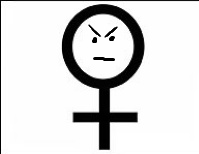
The case of the missing schoolgirl, Megan Stammers, who disappeared with her teacher, has been resolved, with the young woman having been found safely. Unfortunately, some people have used this story to promote their own causes. Last night, Peter Tatchell tweeted this, deciding apropos of nothing that the whole thing must have been consensual on Ms Stammers’s part:

Now, one of Tatchell’s pet causes is to lower the age of consent to 14. He has written volumes on the matter. While he might disclaim the living fuck out of everything he has said, there is still something that sits awkwardly with me with his vocal advocation of this. A man Peter Tatchell’s age should have no interest whatsoever in what 14 year olds are doing (or not doing) in their bedrooms.

The thing is, while he claims the people he wants to see protected are the young people- a 16 year old should not be prosecuted for having sex with a 15 year old- he conveniently forgets to mention that this very seldom happens, and usually only when other abusive shit is going on. Put simply, the law is there to protect young people (usually girls) from older men. When two underage people have consensual sex, there might be a few checks on their welfare, but it’s phenomenally unlikely that anyone will be prosecuted. The prosecutions come when one person is significantly older than the other.

The age of consent is a complicated business, and I find it woefully nonsensical that there’s a magic number of years that happen and then suddenly you’re capable of consenting to sex with anyone of any age older than this figure. Whether it’s 14, 16 or 25, there’s always going to be some people who are more vulnerable to abuse than others. People mature at different rates.

What’s more helpful to examine is the interplay of power differences. Where there is a significant age gap–where one partner is 40 and the other 15 or 16–the extra arbitrary year probably isn’t going to make a blind bit of difference. The problem here is that one person is more than twice the age of the other, with far greater social and legal power. When the older partner is a man, further kyriarchal power differences creep in. If the older partner has a social role which puts them in a greater position of power–such as a teacher–then it becomes even more problematic.

It is these power differences that lead to abuse, not the age. Relationships of this sort will not always be abusive, but there’s so much of a problem with power here that they’re definitely causes for concern.

In fact, the notion of an arbitrary age of consent can lead to problems in and of itself. When girls hit whatever the age of consent is, there’s a certain patriarchal assumption that they’re now “fair game” (TV Tropes calls this the “Jail Bait Wait“; click at your peril): here, there is very real protection for young women, as it seems the only thing protecting them from the creeps banging down their door is the fact the creeps don’t want to be labelled paedophiles. Youth and innocence are fetishised under patriarchy, and therefore the legal boundaries currently do serve as a form of protection, albeit fairly inadequate. Shifting the age of consent down would serve to open up more young women to these predatory creeps who subscribe to patriarchal beliefs.

Vladimir Nabokov’s Lolita provides an excellent exposition of some of the attitudes which allow abuse to happen. We find ourselves liking Humbert Humbert, and rooting for him. At times, we might find ourselves tutting at how difficult and unpleasant Lolita is being, before catching ourselves and remembering that SHE’S A YOUNG GIRL BEING ABUSED BY HER STEPFATHER. It’s a book everyone should read and experience, because it shows you just how easily you can fall into rape culture thinking (also, it is absolutely beautifully written).

Legal protections on the whole are not very good, and what we really need is a vast shift in culture away from retributive justice and towards community accountability. This allows us to respect the agency of young people while still keeping an eye out for causes for concern. And of course, the set of attitudes that allow abuse to happen must disappear.

And that’s a long way off, so what we’re currently lumbered with is an arbitrary number. Maybe it should change; maybe it shouldn’t. The people who should decide this are the ones who are affected by this legal situation: those under the age of consent, and those close to it. At the moment, all I’m hearing is rumblings from Tatchell, when it’s none of his fucking business. He is completely unaffected by this law, unless he intends on having sex with some 14 year olds, in which case he’s completely on the wrong end of the power difference to get a lick of support from anyone. And for him to use a high-profile case to promote his cause is unpleasant. Maybe Megan Stammers went freely. Maybe she was abducted. It is not for us, or Peter Tatchell to decide.


Savages: not the kind of poly representation we need

This post contains spoilers right to the end for Savages. If you haven’t seen Savages yet, read this and save yourselves the price of a cinema ticket and two hours of your life. 

I went to see Savages today. The film has generated quite a bit of buzz in the poly community, as it’s a mainstream poly film wherein the relationship between the characters isn’t the main focus. What could possibly go wrong? Well, absolutely everything.

Our protagonist is a woman called O–which is short for OMG PLEASE STOP DOING CAPTAIN OBVIOUS VOICE-OVERS IT’S PRETTY GRATING–and her two male partners, Nice Boyfriend and Violent Boyfriend (I think they had names, but to be honest, this was the depth of their characterisation). They’re in a V-relationship (or as the mainstream media reviews tend to put it, O is their “shared girlfriend”).

Nice Boyfriend and Violent Boyfriend run a cannabis operation, where Nice Boyfriend does all the nice bits and Violent Boyfriend does all the violent bits. Meanwhile, O is just sort of there. Then one day, some mean Mexicans decide they want to take over the Boyfriends’ business, and because they’re the baddies, they kidnap O, and the Boyfriends work together to rescue her. Lots of violence ensues.

There’s a lot wrong with this film. So much that it’s pretty difficult to know where to start, so excuse me for being kind of stream-of-consciousness, because it’s so intersectionally awful that I’ll probably end up tackling it all at once.

Firstly, it’s pretty fucking sexist. There are two major female characters in this film. The first is O, who is our standard passive Hollywood damsel. She lets the men get on with their business while she just does… something. It’s not clear what she does, what she likes, anything. Awful, cardboard cutout characterisation is a hallmark of this film. O just provides a droning voice-over at various points in the film where the writers can’t be bothered to show rather than tell. She gets kidnapped and raped, and is largely a rather grating McGuffin so the men can do their thing.

Our other woman is Elena Sanchez, played by a Salma Hayek who looked a little young for the role she was shoved into. Elena is the head of a Mexican drug cartel, who starts out as a cardboard cutout female baddie, right down to the red dress. At this point, I’d thought the character was put in to detract criticism from the passivity of the other female lead, but it is later revealed that she’s so evil because her husband and sons were killed. And then motherhood turns out to be her major weakness, which is exploited by the Boyfriends who kidnap her daughter in order to get O back (they literally stuff this woman into a fridge during the kidnap).

Because O is so horribly badly characterised and lacking a single trait other than vapidity, it’s hard to see why the Boyfriends want her back. Perhaps it’s because she’s the only person in the world as one-dimensional as they.

You might have noticed that the baddies are Mexican. This is not handled in a way that is anything other than really fucking racist. We are presented with two sides. On the one side, we have the white, blonde O and the white Boyfriends. They are the GOODIES. On the other side, there’s a bunch of Mexicans. They are the BADDIES. The GOODIES describe the BADDIES as “savages” occasionally, presumably as the scriptwriters give each other a self-congratulatory pat on the arse for having managed to name-check the title so clunkily. Meanwhile, the BADDIES think the GOODIES are savages because they’re in a poly relationship. Yes. They say that. They actually say that.

As well as Elena Sanchez, there’s also two other Mexican baddies of note. One is played by Benicio del Toro, and his character is a rapist and a murderer and generally a thoroughly unpleasant human being. The other is a young guy who ends up getting killed by Benicio and I’m not entirely sure why. They’re all just cardboard cutouts, with various stereotypes about Hispanic people tacked on for good measure.

Also present is benevolent sexism. Nice Boyfriend is shown to be nice because sometimes he goes to Africa and cuddles brown children.

Now, it’s worth looking at where the characters end up to lay bare the fucking mess of sexism and racism in this fucking film, but this matter is complicated by the fact the film has two endings. It has a sad ending, wherein everybody dies, and a happy ending, which is the “actual” ending. This isn’t some alternate ending deal, though. It’s like they decided this film was so shit that nobody would shell out for the DVD so just stuck both endings in the film, with the sad ending being something O and her irritating voice-overs have just made up.

In the “actual” ending, Elena gets arrested along with all the other Mexicans except Benicio, who has quite a nice ending and lives happily ever after. The (white) cop who does the operation does really, really fucking well for himself. O is rescued by not one, but two men, and our protagonist triad go and live somewhere remote and cuddle brown children.

Among all the racism and sexism, it isn’t even that good a depiction of polyamory. This might be somewhat related to Hollywood’s general aversion to sex, while it embraces violence. We get teased with the beginnings of a threesome scene which fades to black before the clothes even come off, while we are treated to, among other things, a kneecapping scene and a shot of a big fucking hole in the back of someone’s head. So perhaps this goes some way to explaining the utter clusterfuck of the main relationship.

O explicitly describes her two partners as being equivalent to one–each representing a “half” of something she needs. Nice Boyfriend is nice; Violent Boyfriend is violent, and a voice-over informs us of exactly how they are opposites of each other and the only thing they have in common with each other is O (and their drug business, which O has conveniently forgotten for the purpose of the voice-over). Um, right.

In the bad ending, Nice Boyfriend is shot in the neck and Definitely Going To Die, so the other two commit suicide and they all die together in the desert, because apparently the writers couldn’t possibly imagine any other way for a poly relationship where one partner dies could end.  Meanwhile, in the happy ending, in another of O’s fucking voice-overs, O informs us that she isn’t sure if three people can ever love each other in a way that is balanced, and that they’ve become savages and she’d rather not live like a savage. And they cuddle some brown children, and they cuddle each other. In both endings, they pay their dues for their sin.

So, in short, it’s a terrible film. Yes, it depicts some characters who happen to be poly, but quite frankly if it’s happening in films that awful, I’d rather we stayed invisible.

“You’re polyamorous, right? Like in the execrable Savages?”

No. Nothing of the sort.

Anti-choice rhetoric: the dog-whistles and the overt

Two stories have cropped up this week, both being examples of a shift towards anti-choice rhetoric. They are both part of the quieter war on choice.

The first is overt, unreasonable and will doubtlessly succeed at anchoring the debate closer to the anti-choice position. A letter was written to the Telegraph, demanding a ban on abortions if the foetus would have disabilities as a person. The Telegraph have given position prominence. Oh, and apparently this is important because otherwise YOU’D BE ABORTING THE PARALYMPICS YOU MONSTER or something. Basically, it’s a desperate attempt to piggyback on the success of something that was on telly.

There’s a lot wrong with the letter. Most notably, it was not signed by any groups led by people with disabilities. Most of the signatories were the usual suspects for anti-choicers: groups like Life and the Pro-Life Alliance, and Catholic bishops. The one disability group mentioned was a research group for Down’s Syndrome, which is not led by people with Down’s Syndrome. The voices of people with disabilities in this matter have not been represented, which is rather distasteful since they’re the ones who would be affected by this, rather than a gang of uterus-obsessed fascists.

Perhaps people with disabilities don’t think this is the way forward because they’re busy campaigning to make life better for people with disabilities and fighting against a government that is determined to destroy their futures–a far more pressing concern. The thing is, that’s how the anti-choice lobby works. They don’t give a flying fuck about people, just control of women’s bodies.

As much as the anti-choice lobby may scream about eugenics, it is in fact they who still subscribe to this medical model of disability, while disability rights activists are focusing more on the social model. We need a society that is set up to make life easier for people with disabilities, not harder. We don’t have that yet, and it’s a long way off. If the anti-choice lobby really wanted to stop abortions of foetuses that might turn into disabled people, they need to work with the people who are already alive. And they won’t do that, because it’s all a smokescreen for what they really believe: destroy bodily autonomy.

The second story is less overtly anti-choice on the face of it. A woman has been jailed for eight years for self-inducing an abortion at 39 weeks of pregnancy. The reporting of this has been absolutely terrible, screaming lurid details about the woman’s life: her previous pregnancies, her affair. As Twitterer @MarthaRRobinson put it, if one changed the gestation dates, all of the news stories could have easily been from 1910.

And even people who would normally call themselves pro-choice are falling over themselves to demonise the woman, using logical somersaults to try to justify themselves by saying it wasn’t really abortion because of the dates, or whatever. Yet it was abortion, and it was a desperate woman with no other options and no support. She is now in prison, serving a longer sentence than many serve for molesting a real, living child.

To be truly pro-choice, we must empathise with her, rejecting jail sentences for what happened to her, and working to build better services so nobody has to go through what she did. We must not hang her out to dry.

We pro-choice people must stand firmer than ever against these assaults from the anti-choice camp. The two ministers responsible for women’s reproductive health are both already moderately anti-choice, and will likely use any shift in discourse away from choice as an excuse to legislate their way into our uteruses. We must not let this happen, and we must be loud and united in our support of the right to bodily autonomy.

What’s so sexist about the Indy’s new big report?

The Independent have published a big new special report today, and are slice-and-dicing it across the week. It’s about how more women are going to prison and how terrible that is. Today’s piece is about women in mother-and-baby units in prisons. It’s also expanded on in an opinion piece, which spells out what we’ll be seeing in the Indy over the next week.

The focus of the investigation is mothers going to prison, and being separated from their children. This is a Very Bad Thing, apparently: according to a vaguely-written headline, either the women or their children are the “hidden victims” this system. All three of the pieces linked smack of benevolent sexism, the societal reverence for this special female magic which in fact doesn’t exist and is massively sexist. Benevolent sexism basically needs to die in a suicide pact with its brother, hostile sexism (for a full overview of benevolent and hostile sexism, read this).

The benevolent sexism in their line of agrument is exemplified in the introductory article:

Britain has the highest rate of female imprisonment in the European Union, with 10,181 women put behind bars last year alone. That statistic has raised fears that the criminal justice system is creating a lost generation of children raised without mothers.

Children need mothers. Mother knows best. MOTHER MOTHER MOTHER. It’s like the article was co-written by Freud and Stephen Moffat. Women have special mum-magic, and the consequences will be Very Bad otherwise.

So what does this mum-magic prevent?

Nearly two-thirds of boys with a parent in jail will go on to commit some kind of crime themselves, research shows, and children with a parent behind bars are three times more likely than their peers to engage in anti-social behaviour. Their chances of suffering mental health problems also increase threefold.

Now, look very carefully at the first sentence there. Notice it says “parent” not “mother”. That’s because it’s referring to parents, not mothers. And that’s because it’s closeness to parents, not mothers, that’s important. Not that this deters the nameless author of the opinion piece, who gives us a sneak preview of the latter instalments of the report with this gem:

Over the coming week, we will lay bare the shocking truth about what happens in the majority of cases where mothers and their children are separated. We will consider the impact on the women themselves, both in and out of custody. We will look at the lives of those who are left holding prisoners’ babies, or bringing up their distressed children and disturbed teenagers – a burden which mainly falls on grandmothers and other female relatives. Indeed, it is a staggering indictment of modern fatherhood that only 9 per cent of such children are looked after by their fathers.

Replace “modern fatherhood” with “patriarchy”, and the author has a point. Otherwise, it’s just yet more benevolent sexism. Women are caring, and waft around farting rainbows.

I can see the future articles laid out before me. It will be a return to the earliest incarnations of the work of John Bowlby, who authored a monograph on “maternal deprivation” and how it led to delinquency, decreased intelligence, aggression and affectionless psychopathy in children. However, later Bowlby clarified his work pertained to general upheaval of a close parental attachment and wasn’t specific to mothers. The Indy don’t seem to have read this bit.

What amplifies the benevolent sexism of the Indy’s new report is what isn’t mentioned at all: that the vast majority of people in prison are men. And that the vast majority of people in prison are men precisely because of the underlying set of attitudes driving the Indy’s report: women are too nice and good to commit crimes, and if they’ve reproduced they’re probably fucking saints. It’s dated, and it’s sexist as hell.

I can think of ulterior motives for publishing this piece. The first is a desire for a return to “traditional family values”, an idea which basically needs to fuck off as it places the mother as caregiver, the father as breadwinner, and keeps everyone neatly in their patriarchal places. The second is to attempt a broader critique of how more people are going to prison. Now, this is a very important point indeed. As an anarchist, you might have guessed I’d not be so keen on the concept of prison, and, indeed, I find the whole notion of retributive justice grotesque and the concept of the state locking people up fairly abhorrent (in fact, the concept of crime is somewhat baffling to me). For those of a more liberal persuasion, you can argue against prison on the grounds of how expensive prison is compared to rehabilitation. Prison’s basically bad. If the Indy are trying to push this line, they’re going entirely the wrong way about it, given they just focus on one very small group of prisoners and drag in a lot of sexism.

Ultimately, what we need is two things: a radical rethink of our justice system with a move to not putting people in prison, and a radical rethink of how families are constructed and how we view women in general. That will be the thing that stops fucking up future generations, and demand nothing less.