
Content warning: this post discusses rape, sexual violence and media misogyny
Rape scenes are horribly popular in the media, and seldom necessary. With a flicker of hope, I wonder if savvy viewers are finally kicking back against this tedious trope as an opening-night audience booed a completely gratuitous rape scene crowbarred into an opera.
The defences of the scene were the same old tired shit. The director of the Royal Opera House said:
“The production includes a scene which puts the spotlight on the brutal reality of women being abused during war time, and sexual violence being a tragic fact of war,”
while one of the cast said:
“Maybe it went a little longer than it should have, but it happened and I think it’s an element you can use to show just how horrible these people were that were occupying this town,”
while the director of the production said exactly the same thing too:
“If you don’t feel the brutality, the suffering these people have had to face, if you want to hide it, it becomes soft, it becomes for children,”
I often wonder about the existence of this hypothetical audience member who cannot understand that a villain is bad, and conditions are awful for women, without being literally shown a woman being raped. I presume Rossini, who wrote the opera in 1829, didn’t have such a low opinion of those who would appreciate his work, considering he didn’t write that scene in himself–it was added by the director.
I’ve written before about how a competent production doesn’t need to show a rape scene for the audience to grok that this is a bad place full of bad people, comparing the latest Mad Max to Game of Thrones. To me, putting a rape on stage or screen or on the page as a form of scene-setting is the very pinnacle of laziness. A decent writer or director can build up an air of threat, of terror, without having to use salacious violence against women as a shorthand for this. It’s the Michael Bay school of show don’t tell… rather than hinting and using subtlety, they show with a gross insult to the audience’s capacity to think.
Yes, there are times where as rape scene is actually relevant to the plot, but these instances are few: tiny, compared to the number of times such scenes have been smeared in there like shit on a portaloo wall.
People will use the potentially imaginary audience member to excuse what is essentially a failure of men’s skills at writing and directing. I cannot say I have ever met or spoken to–or even had a screeching comment–from somebody who admits that they are incapable of grasping that the situation is dire or the villain is a bad ‘un without having to see somebody being raped.
Perhaps, therefore, audience are smarter than writers and directors think. And this means that they must stop using the same worn-out old excuses to cover for their fatuous productions. In turn, perhaps this means they will finally have to face a challenge of creating something with a little bit of thought behind it.

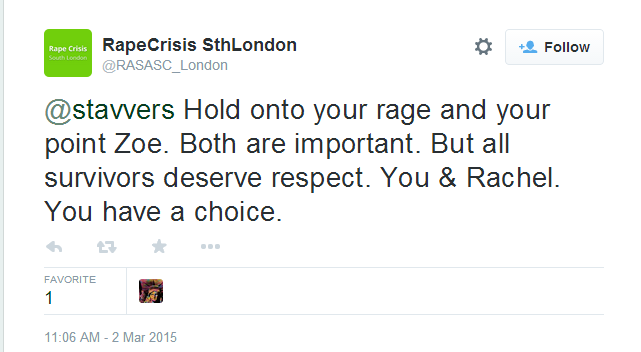


 Another angry woman