Things I read last week that I found interesting

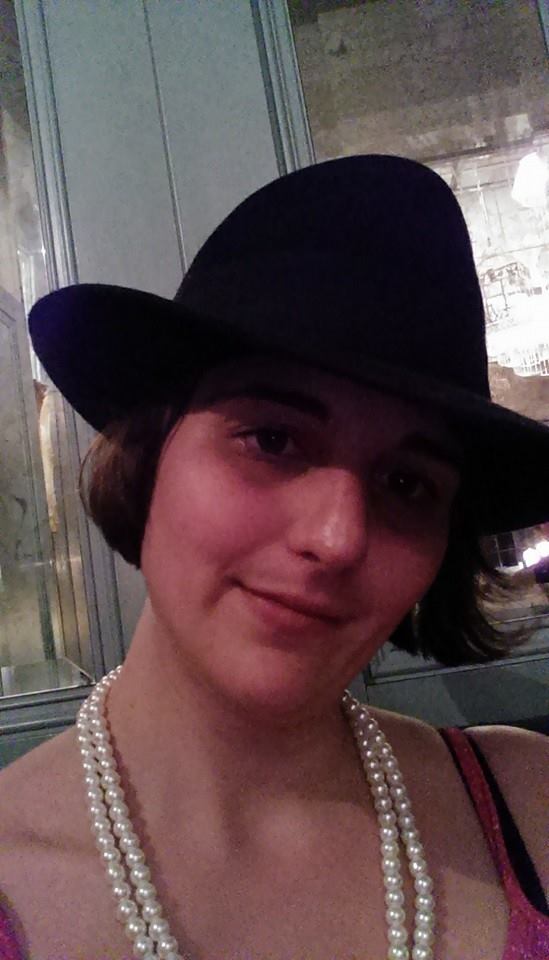
A little late on the weekly round-up and also I didn’t read much so here’s a picture of me in a fedora to make up for it.

10258637_997601698881_3940032820785357294_n


Fatphobia: A Guide for the Disbeliever (Kitty Stryker)- A comprehensive, go-to guide on what fatphobia is.

Everyone is an expert on Nigeria now (Audiophile Life)- On white Western people and #BringBackOurGirls

So… farewell then, Jessie J (Louise Carolin)- Good piece on Jessie J and bisexuality.

#everyBODYisflawless (GabiFresh)- Gorgeous body positivity.

Fast tracking Mental Health Social Work (Fighting Monsters)- Pretty thorough explanation as to why the government fucked up.

Notes From A Queer Engineer: Can Inanimate Objects Be Sexist? (Laura Mandanas)- Really cool piece on how inanimate objects can favour certain bodies and brains.

And finally, ever wondered what the neo-Maoist Posadist view of the Chuckle Brothers is? Wonder no more.


Poly Means Many: From within

Poly Means Many: There are many aspects of polyamory. Each month, the PMM bloggers will write about their views on one of them. Links to all posts can be found at www.polymeansmany.com. This month’s topic is misconceptions and judgments

One of the main reasons I write about my love life on a monthly basis is because I’m aware by society’s standards it’s a little on the unusual side, and I sort of want to demystify it. This month, the Poly Means Many project is revisiting the idea of misconceptions and judgments that people tend to make. Last time, I wrote about the overlap between this and biphobia.

This time, I’ve been thinking a fair bit about the stuff that goes on within our own community and the gross oversimplifications that often pop out of our mouths when we’re defending ourselves, and the side of our community that is presented to the public.

Polynormativity” was a term I found really useful when I learned it: an umbrella term for the media-sanctioned brand of polyamory that you’ll generally see in the lifestyle sections of the paper. It’s the kind straight-man-bi-women arrangement with built-in hierarchies, where everyone’s cute and white and it’s definitely not all about the sex because they are going to have babies and a nice house. When your average non-poly person thinks of poly, this is kind of thing that springs to mind, and it’s a nice thing to present because very few people are going to have much of a problem with it, as it maps on to the generally socially-accepted life trajectories.

Now, it’s not like these relationships don’t exist. Hell, they do, in buckets. And it’s why a lot of the time I don’t get on well with poly men, who will often want to crowbar me, sooner or later, into that sort of arrangement. This isn’t necessarily just how poly relationships are presented, this is how a lot of people expect and want them to work, and because it’s so normalised, it’s sometimes not even negotiated. That is absolutely and categorically not OK. We as a community need to just as aware–if not more so–as mainstream mono society of the dangers of assumptions and avoid making them. 

I definitely feel like sometimes I get judged from within the community for my rejection of a lot of polynormative values. As I wrote last month, I reject the relationship escalator, which means the babies and the nice house are something to which I definitely do not aspire. And for me, a lot of it is about the sex. I am a powerfully sexual person. I like sex. I love sex. I love having sex with lots of beautiful and amazing people, sometimes all at the same time. I have literally been accused of commitment phobia from poly people for how I conduct my relationships.

The poly umbrella is a diverse community, and because of this, we need to avoid making judgments about how others within our community live. This can be hard: we are all, after all, unlearning all the wrong things we were taught about love and sex and relationships. And we’re getting good at how they apply to ourselves as individuals, but not so much when we meet someone who does things differently. The thing is, there’s enough judgment coming from outside our community. This is not the fault of those of us who fail to meet up to mainstream society’s definition of almost-normal.

Things I read this week that I found interesting

Happy Star Wars Day, everyone. I read things and I found them interesting, and I am showing you some links. Maybe you’ll find the interesting too. None of them are related to Star Wars.

Gender Performance: The TransAdvocate interviews Judith Butler (Cristan Williams)- Ever wondered what Judith Butler thinks of TERfs? Wonder no more.

Jeremy Clarkson, UKIP, and badges of honour. (Musa Okwonga)- Musa writes beautifully on the terms of debating racism in the UK.

17 Lies We Need to Stop Teaching Girls About Sex (Julianne Ross)- Very simple and excellent point-by-point piece.

7 Reasons ‘Radical’ Publishers are Getting OWNED by the Internet (James Butler)- Old publishing is fucked, and here’s why.

Race shatters the idea of a shared female experience (Reni Eddo-Lodge)- A light in the otherwise relentless shitfest of the Feminist Times’s #GenderWeek.

Class is to gender what a tube map is to London (Roz Kaveney)- The only other FT GenderWeek post worth reading.

Is the DOJ Forcing Banks to Terminate the Accounts of Porn Stars? (Mary O’Hara)- Something fishy seems to be going on in the US. Read all about it.

Elsa and Trans Iconography: The Snow Queen’s Gloves Come Off (aiofeschatology)- A very interesting reading of Disney’s Frozen.

And finally, more honest Daily Mail headlines.

On mother’s names and marriage certificates

Let me start by saying I don’t just have a problem with every feminist petition on change dot org. Heck, I’ve linked to a fair few in my time. I just have an issue with a certain streak of liberal feminism, the high-profile sound and noise which makes a big media impact because even if a campaign is won, nothing will change.

The latest of this ilk that has bothered me is a petition to put mothers’ names on marriage certificates as well as fathers’. As with much of this brand of feminism, on the face of it, it sounds perfectly reasonable, a step towards equality. However, what this all fails to understand is what marriage actually is. Historically, marriage is a political arrangement, to join bloodlines. It is a relic of a patrilineal society, and by existing, it continues to keep the old ways alive. It comes as no surprise, then, that it is only fathers on the marriage certificate, because it is only fathers who matter throughout the way we frame lineage. Lineage itself is very literally patriarchal.

Let us imagine for a second that this campaign was won–which seems plausible given it’s such a minor tweak to the system. The mother’s name now appears on a marriage certificate. But who’s name is the mother’s name? Odds are, it won’t be hers. If your mother married your father and took his name, then she has his name. If your mother has her “own” last name for any reason, that comes from her father or some other male ancestor. This is how lineage works: as women, almost all of us have names conferred on us by men, save for the very few who are awesome enough to carve out their own true names. Therefore, to put a mother’s name on a marriage certificate is simply to add more detail about the male line.

There are far better uses for our time. I ought to remind readers at this point that I am far more in favour of completely abolishing marriage than I am of reforming it to make it marginally more inclusive. I think we should solve the problems which require people to marry: to preserve immigration status, to confer next-of-kin status, and various tax and income perks. Make it easy to do these things without marriage, then grind the whole patriarchal institution into dust. Stop the state from dictating how we form families, and create something beautiful and new.

I realise I’m an idealist here, and so I also offer a more pragmatic solution to equality on marriage certificates: do away with naming parents entirely. It’s bizarre and dated that, in 2014, one still needs to mention who owned those getting married before a transfer of ownership. Why not get rid of this archaic requirement entirely?

This would have more benefits than adding a mother’s name. There are a lot of people who are estranged from their parents, for good reasons. Their parents are irrelevant to their lives, so why should there be any need to acknowledge their existence simply to get married? There are benefits for everyone in getting rid of parents’ names on marriage certificates: it chips away, ever so gently, at the patrilineal foundations of marriage itself. This is also just as easy a minor tweak to marriage as putting another name on the certificate.

And maybe after we’ve done that, we can abolish marriage completely?

In which I think out loud about a film I watched: Under The Skin

Content note: This post contains spoilers for Under The Skin, and a discussion of rape and sexual violence. 

This week I finally got round to seeing Under The Skin, Jonathan Glazer’s sci-fi film about sex and aliens and stuff. As I mull it over, I still can’t quite digest my feelings about it; I’m not sure if I necessarily liked it, but it certainly made me feel things. It was beautiful to look at, providing an arty and distinctly alien view of Glasgow, and the sound engineering was absolutely stunning. Scarlett Johansson delivered a spectacular performance as the alien protagonist. It was pleasingly oblique, with plenty of room for interpretation (or polite befuddlement).

What touched me hardest was that I’ve never seen a film which has summed up my own feelings about heterosexuality so perfectly. We see the world through the eyes of an alien wearing the body of a beautiful woman, and her confusion and disgust at the way men react to her. We see her making polite small talk with men who want to impress her, we see her horror as she enters a meat market night club, and we see her weary acquiescence to being cared for by a man in a time of need. All of it is presented as disorienting and weird, oddly repetitive, and thoroughly and completely unsexy. This is largely how I feel in my interactions with men who I can tell want to have sex with me, and I don’t blame her at all for spending a lot of the second half of the film running away.

For a predatory alien, it is also rather striking how conditional her power is. She is only capable of killing when she has successfully lured men back to her house and undertaken the procedure for suspending them in oil. At all other times, she is helpless, apart from one brief window of opportunity where she is presented with a weakened and near-unconscious man. Even under these ideal conditions, it is hinted at that the alien is not acting of completely her own volition: throughout, we see her shadowed by a male motorcyclist minder.

The climactic scene of the film cements these themes, as her conditional power and the strangeness of heterosexuality converge. A man attempts to rape the alien in an isolated forest. She is powerless in this situation, away from her safe space and up against a man physically stronger than her. It is only the rapist’s disgust that prevents the rape: in the violence, her skin is torn from her body, and her true form is revealed. This disgust does not save her: she is set on fire by the rapist and is ultimately killed.

I didn’t like the ending at all, because it was a story I have heard all too many times before, albeit with a metaphor of an alien tacked on. Sadly, it seemed inevitable from a narrative perspective.

This is, of course, my reading of the film as a queer woman. I almost can’t see how it’s not about what I think it’s about, but I know it can’t be. This was a film made by men, and as such, the likelihood of them setting out to make a film exploring these themes is phenomenally unlikely. So I sit and wonder exactly what they had in mind. Is it working through fear of female sexuality? Are they trying to equivocate the alien’s predation with that of the rapist at the end? Knowing this film was made by men makes me understand it less. And yet, if this film had been made by women, this exact same film, I don’t doubt that rather than being lauded, it would have been panned as these themes would have been more readily accessible and the mainstream is not ready for a film like that.

I recommend watching, if you haven’t already. Technically, it’s a brilliant film, and I’d love to know if others saw what I saw.

Things I read this week that I find interesting

Happy Sunday, chums! As always, I present a round up of things I read this week and found interesting. Maybe you’ll find it interesting, too.

Against feminist orthodoxy: why sex positivity is sex critical (Ari Silvera)- If you read one thing this week, make it this one. This is how sex positivity needs to work.

Problems with Names (Sara Ahmed)- An important piece on the importance of labelling sexism.

Lessons Learned From Menstruation Pop Quizzes While Being Intersex (Claudia)- Fun, tongue-in-cheek piece from an intersex woman about the ubiquitous assumption that all women must menstruate.

Getting to trans 101 (roseannastar)- On what “cis” means. Shit that shouldn’t need saying, said well.

Gender and sex (bangbangbeautiful)- Really good smackdown of biological sex, as it applies to humans and other animals.

5 Election Poster Campaigns the Parties Wish You’d Forget (Novara)- A reminder that Ukip aren’t the only ones preying on racism and homophobia.

On Poverty (Paul Dean)- Excellent personal piece on living in precarity.

Women. Comics. Some thoughts. (Marjorie Liu)- A call-out about sexual harassment in the comic book industry.

GitHub: sexism, bullying, harassment, and a curiously clean sweep. (Okwonga)- Analysis of the sexist climate at GitHub

Company’s response to outrage over its sexist T-shirt only makes things worse (Gavia Baker-Whitelaw)- Seriously, geeks, sort out the sexism problem, yeah?

Before Batgirl, weirder than Wonder Woman: lost superheroines of the pre-code era (Saladin Ahmed)- 60 years ago, and more, there were women in comics. This post celebrates them.

Mental illness: not a flavor, not an excuse (Shoshana Kessock)- A constructive call-out on the use of mental illness in gaming.

And finally, cats in places cats shouldn’t really be.

Guilty pleasures: feminism with compromises

The other day, I wrote a little bit about the need for nuance in feminism, and uncoupling the identity as a feminist with what we do, and what we like. I’ve been thinking more and more about how we all do things which conflict with our own politics, and the often complicated feelings that accompany this.

There’s the definitely basic survival stuff, like having to work in a supermarket despite supermarkets being literally manifestations of Satan’s gob, or calling the police after having experienced violence despite the police being literally the fucking worst, or accepting donated food from religious organisations who would literally happily force women into pregnancies. Sometimes doing these things which are politically fraught is necessary, and yet I have seen shit levelled from a position at privilege at people who have found they needed to do those things.

Then there’s the stuff that’s higher up Maslow’s hierarchy: the stuff which is often considered something that could be done without, even though I’m not so sure. Take, for example, sex. Politically, I feel like having sex with men is riddled with political problems, both in the abstract and as a direct threat to my own personal safety. I believe that the power difference between men and women complicates any intimate relationship for the worse. Sex is not always nice or good for you. I have a lot of sympathy for political lesbianism. And yet, I have sex with men sometimes. I’ve drawn lines where I feel comfortable for my own safety, but I have sex with men on my own terms despite this being largely at odds with my politics. I have sex with men, and I like it, and it makes me feel happy.

There’s lots of other things I do and enjoy which I find problematic. I can’t remember the last time I saw a film or TV show which completely passed my high standards, and I have a shelf full of eighties bonkbusters of the distinctly sex, shopping and shoulderpads genre. Every single thing I enjoy, I will have my moments where I sit and cringe, but I’m not going to stop, because if I did I’d find myself sitting under the bed (and probably feeling guilty because I have a large shoe collection, compatible with many stereotypes about women).

Nothing happens inside a vacuum. Literally everything we do–and enjoy doing–happens within this oppressive power structure. Kyriarchy permeates everything, and I am not convinced any of us can ever live up to our own ideals. I’ve personally ended up in more than one guilt-spiral and it’s never ended well.

The fact is, we all draw our lines for getting the fuck away from something somewhere. We all decide which little things we can let slide for not being compatible with our politics because it is impossible to opt out of absolutely everything. And many of us turn this negative into a positive: for example, we enjoy media critically and it shapes debate and discourse. We are conscious of our actions, and the everyday problematics that pervade our lives.

It’s a personal thing where the lines come in. For example, some survivors cannot watch anything with rape in it, while others find catharsis in watching a rape scene. Some find playing a submissive role in BDSM empowering, while others find it vastly disempowering. Some might drink Starbucks coffee and enjoy it, while others might reject it and bring their own tin of instant to work. Ultimately, all of these choices are equally valid and pretty harmless to other women. They’re dependent largely on a personal level of tolerance, which is always tied in to a unique personal history.

All of us are hypocrites, and that’s OK. It was never going to be possible to reach the standards we want to reach. In enjoying our guilty pleasures, it is vital that we are critical of what we consume, but it does not mean we need to duck out; nor does it mean that we ought to police the guilty pleasures of others. For the most part, personal enjoyment of something problematic is not the problem: it’s the thing itself that is. We’re fucked right now, but we may not be in the future. For the time being, enjoy–and enjoy critically.
Can you be a feminist and write “can you be a feminist and” articles?

Writing an article examining whether one can be a feminist and do whatever the article’s about seem to be all the rage at the moment. From working certain jobs, to having certain sex, to liking certain media, to standing with your hands on your hips, all is fair game to be examined through this lens. It makes for an easy article and you can go home with your ninety quid fee from Comment Is Free and enjoy a nice cup of whatever beverage is still feminist to enjoy.

This whole format is asking the wrong questions, from the wrong perspective. To ask if one can be a feminist and positions feminism as a question of individual choices and identity as a feminist rather than movement. It’s hardly a surprise that this format has erupted to popularity within comment journalism, which typically focuses on a watered-down liberal model of feminism, devoid of the radical kick we need to Get Shit Done. It elides asking why things are as they are, and proposing solutions, instead lumbering blame on the unfortunate women who commit unfeminist acts, or lauding those who act adequately feminist.

Positioning behaviour and feminist identity as sometimes opposing factors that need either reconciling or boycotting inevitably leads to bollocks. It leads to vehement declarations that something must be feminist, because the author as a feminist enjoys it, or, conversely, that something must be unfeminist because the author as a feminist does not like it. It neatly sidesteps asking the awkward questions, such as, where does this all fit in with a model of dominance and power? It is a study in egocentrism: the author’s views as a feminist suddenly become the definitive feminism by adopting this position as judge.

Issues are oversimplified. If something is unfeminist, then all we need to do is not do it to make the world a better place. The boycotting model works just fine and dandy for the most privileged of women, but for many of us, bargains are required for survival in this violent system. Such can one be a feminist and articles fail to examine why one would possibly do these things, in favour of a very basic proclamation that this is unfeminist. On the flip side, something deemed feminist is considered above criticism, no matter how problematic it may be.

Ultimately, one can be a feminist and full of conflicts and nuance. One can call oneself a feminist and do things which are horribly harmful for other women, such as becoming a CEO, being anti-choice or being a galloping bigot. Feminism is a broad church, and a lot of our sisters are wrong. The sort of feminist who writes opinion pieces as to whether one can be a feminist and, the one who lacks the vision to ask the right questions–and, indeed, lacks the vision to even examine the right problems–she, too is a feminist.

Our attention need not focus on individual behaviours and our own personal identity as a feminist. Instead, we need to think bigger, think broader. This is the sort of thing that will not get published in the mainstream, for it poses a genuine threat to patriarchy.

pretty-jelly-fish It’s that time of the week again. I’ve added a picture of a jellyfish today, because well done to jellyfishes.

Exclusive: Inmates to strike in Alabama, declare prison is “running a slave empire” (Josh Eidelson)- Read all about why Alabama prisoners are going on strike.

Words Don’t Burn, but Bodies Do (aiofeschatology)- Beautiful essay on slurs.

The complex issue of looking like a fake when I get up and walk (latent existence)- Really important piece on everyday disablism.

50 Shades of Grey or Contemporary Christian Music Lyrics? A Quiz (Homeschoolers Anonymous)- A surprisingly challenging quiz. I got 4.

Reviewing through the Time Machine: Remembering Margaret Cavendish (Rhube)- Margaret Cavendish invented science fiction. Let’s remember her.

The Woman Who (Maybe) Struck out Babe Ruth and Lou Gehrig (Tony Horwitz)- An interesting bit of mostly forgotten sport history.

White Britain, Now Will You Listen? (Sam Ambreen)- Sam ponders racism in the UK.

How Does the Sunday Sport Get Away with Its Bullshit? (Gavin Haynes)- Enlightening interview with a lawyer explaining how perfectly legal the patently made-up tosh in the Sunday Sport is. Note: skip the beginning, it’s full of Vice hipster classism, and just get down to the interview.

And finally, some behind the scenes footage from the Bohemian Rhapsody video.

Let’s question why men want anonymity for rape defendants

Content note: This post discusses rape, sexual assault and rape apologism

Fresh off the back of his own trial for a series of sexual offences, Nigel Evans has called for anonymity for defendants. Evans got off as his own defence put his behaviour down to “drunken overfamiliarity”, and throughout the trial he came off as at the very least a massive creep and young people are more likely to be on guard around him in the future.

Evans’s plea is one much repeated among those who seek to protect perpetrators of sexual violence. The call comes up again and again, a repeated screech. The thing is, the evidence shows that anonymity for defendants in sexual offences only protects rapists and abusers.

Between 1976 and 1988, the UK had anonymity for rape defendants. It led to a number of practical problems, including a very major and horrific one: if a rapist escaped custody, there was no way of warning the public that a dangerous rapist was on the loose. There’s also the very important fact that when a perpetrator is named, more survivors tend to come forward. Take for example, the case of John Worboys, the “Black Cab Rapist”. Once Worboys was named, a large quantity of survivors came forward, which helped to convict him. Before this, the police had dismissed allegations against Worboys from survivors who came forward individually.

The evidence shows clearly that anonymity for defendants only helps rapists and abusers, so why are men so keen to defend it? Even as I tweeted about Evans, I was besieged by men–the sort of men who thought themselves good, rational types–saying they believed in anonymity for defendants. Two equally irrational lines of argument cropped up: first, the tired old one about false allegations, and second something about equality.

The thing about false allegations is dull and takes seconds to puncture. The rate for false allegations is low, possibly lower than most other crimes. This persistent myth calls open season on rape survivors, and makes it harder for them to come forward. Clinging to this myth harms only survivors, and it is a completely irrational belief to hold. Men should be more worried about dying from alcohol poisoning than being falsely accused of rape.

As for equality, fuck that shit. The anonymity protection for survivors is a tiny nod to the fact that the system is entirely stacked against them. Anyone who thinks adding on anonymity for defendants is equality doesn’t understand what the word fucking means. They’re calling to stack the system further against survivors.

So with these two irrational arguments punctured, we need to wonder why men are so keen to protect rapists and abusers. My own personal theory is that they know in their hearts they, too, have something to hide. They remember that night where she was too drunk, they remember that boy who was far too young, they remember that time they had to wheedle and fight for it. They remember these things and they feel afraid, afraid that one day someone might be empowered to speak out. They can pretend away that any allegations would be false, but the truth is that these things were lines crossed, and deep down they know it.

It’s the only way I can explain why men are so persistent in pursuing something with no founding in evidence. Why else would they support something which only protects perpetrators?