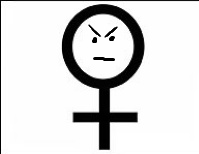
Why I never signed the No More Page 3 petition

The other day, while I was busy being snowed on outside a courthouse that had been locked to keep people like me out, there was apparently a development in the ongoing No More Page Three campaign. It had sort of passed me by, I’ll admit; the only news that day that came to my attention was the papal resignation (it’s alarmingly disconcerting to emerge from the toilet to discover the pope’s resigned. Makes one wonder just how unholy one’s urine is).

It seems, though, that Rupert Murdoch has alluded to modifying Page 3 to make it all fashionable or something, and possibly taking the boobs off the dedicated boob-page. This has breathed new life into the No More Page Three campaign, and it’s been everywhere once again.

I’ve tried to bite my lip on the No More Page Three campaign, being painfully aware of my burgeoning reputation as that feminist who spends too much time shouting at other feminists, and thinking it ultimately rather harmless and easy to ignore. The thing is–to use a figure of speech befitting the theme–the No More Page Three campaign has been getting right on my tits. At best, it won’t get much done, and at worse, its supporters will think this lack of things getting done is some sort of a victory.

Let’s start with a tweet from an online repository of jokes, many of which are sexist, ableist, racist, cissexist, heterosexist and any other form of oppression you can name (and probably some that don’t even have names):

Strangely, this tweet actually manages to Get It far more than vast swathes of the No More Page Three supporters. The Sun is a buzzing wasp nest of misogyny: itsjustahobby documented just a day’s worth of sexism in the top stories of their website alone. I find Page 3, with its large picture of boobs taken with the woman’s consent, actually somewhat better than all of the other pages of longlensings and body-shaming and gleeful rubbing over celebrities and their mental health, and so forth. That’s not even including the frequent bouts of overt racism, homophobia, transphobia and ableism that pepper its foul pages. The whole publication is absolutely fucking vile, and participates actively daily in outright harassment of women who have the misfortune of being famous, or poor, or brown, or whatever other excuse they can conjure to invade their privacy and pretend this is somehow in the public interest. Whether words or images, all of this is irrevocably harmful to both the individuals “exposed” by this pathetic excuse for journalism, and to society for thinking believing the propaganda in the Sun is anything other than hideous.

And when you think about it that way, you realise that the whole of the media is rotten all the way down: all of the tabloids stoop to the same low tricks as The Sun, and everyone else is complicit. They all revealed their true colours as they closed ranks against the findings of the Leveson Report. Combatting a single page of a single newspaper doesn’t even leave a dent in this apparatus. It feels almost like going after this one page legitimises the rest of the sorry mess by its omission to even address this.

Now, one could say this campaign is a transitional demand in ending the objectification of women. However, that’s ignoring the fact that objectification is itself a symptom; the problem of objectification did not magically spring from nowhere: it is a product of capitalist patriarchy. Sex sells. And to end that, one sort of has to absolutely rip this shit out at the roots and enact a global revolution, which is a bit of a big ask for liberal feminists. Even on its own terms, getting rid of that single page in a single newspaper won’t exactly do much for ending the objectification of women, because this shit is absolutely everywhere.

However, that’s assuming that No More Page Three is actually about objectification, which many of its supporters argue it is. I’ve read the text of the No More Page Three petition. I read it before deciding–with all of these criticisms already in mind–not to sign it. And it is just about boobs. It’s literally just about the presence of boobs and how they’re not on This Morning and other such stuff. I couldn’t agree with the fact that boobs shouldn’t be in a “family newspaper”, which is all that the text of the petition said, so I didn’t sign it.

And actually, if anything, we need more boobs everywhere. Diverse boobs. Parents breastfeeding openly, pictures of all colours and shapes of boob captioned “look, boobs, aren’t they pretty?” and boobs depicted like they ain’t no thing, because a lot of people have boobs. And not just boobs: cunts and cocks and bums and naked bodies in all their glory. Willingly shown. The human body is kept a mystery, and nobody knows what’s normal these days: the truth is everything and nothing. When I was young, I thought I had a weird cunt because it looked nothing like the narrow range of cunts society saw fit to show me: textbook illustrations and porn. It was only when I started fucking other women that I became sure there was nothing wrong with mine. The naked body needn’t be anything to do with sex (although it’s nice when it is), and it’d be lovely if we got over all our hangups about nudity and were just naked more, in film, print and in person.

But of course, this dream can’t be realised because of the aforementioned capitalist patriarchy which is in dire need of a smash and it’s very difficult to have that revolution in the buff.

Unfortunately, the No More Page Three campaign is not part of this revolution. It’s largely orchestrated and supported by those who would never buy The Sun in the first place, probably for at least some of the reasons I’ve already discussed (or perhaps for others, e.g. Hillsborough, phone hacking), and, due to the way businesses work, they really don’t give much of a flying fuck about people not buying the product continuing to not buy the product while also hating it. Asking nicely doesn’t really cut it. You need to be vicious and take action that’s a little more direct. Once I annotated a copy of The Sun that I found in a greasy spoon, highlighting sections which were particularly egregiously racist or sexist to the next reader who picked it up. It wasn’t much, but it was something which might have changed someone’s mind.

To me, No More Page Three feels like a synecdoche for the shortcomings of a particular flavour of liberal, bourgeois feminism. It’s something which is nowhere near enough and popular precisely because it will not rock the boat for those in power. And it’s a compromise I see no point in making.

The value of trigger warnings

Oh dear, Vagenda. This week, one of the authors has come out against trigger warnings. Her reasoning? She had PTSD, and doesn’t like them because she prefers to confront her problems, and also the internet isn’t a safe space.

For the first point, good for her. Seriously, good for Rhiannon, and I’m glad that she’s fairly on top of her mental health problems and has found a way to live with them and deal with them. She’s one of the fortunate ones: many others are not in this position. There are many who would rather avoid seeing things which remind them of trauma, many who would like to be able to close the tab and get on with their day, instead of inadvertently reliving horrors.

And it’s these people who I’m thinking about when I put trigger warnings at the top of things I have written. If I’ve helped even one person avoid pain, then I am glad. It’s a little thing for me to do, which can make the all the difference for some people.

Trigger warnings are not for yourself; they’re for others. And if Rhiannon from Vagenda prefers not to avoid things, she can use the trigger warnings to seek out content to expose herself to as part of her own personal healing.

Rhiannon uses the metaphor of epilepsy to illustrate her point that the internet isn’t a safe space: that, for all the warnings about strobe lights, epilepsy can be triggered by light flickering through the trees. It’s worth noting here only a very small fraction of people with epilepsy are triggered by strobing effects. I’m not, and I’ve had several hours of being hooked up to gooey electrodes staring into a flashing light to prove it. When I was younger and newly-diagnosed, I used to hate that they would put the “epilepsy warning” up before films and plays and so forth, because I had epilepsy and didn’t have a problem with flashing lights. It annoyed the fuck out of me. Then I started thinking of other people, and I realised these warnings weren’t for me, but were hugely valuable for others. The same is true of trigger warnings.

And yes, they’re imperfect. Everything is, at the moment. I’ve sat in meetings riddled with manarchists complaining about the need for safer spaces policies, because there’s no such thing as a safe space.

No. There isn’t. But that doesn’t mean we should use that as an excuse to stop trying and stop using these interim measures which do help.

If you read the comments on the Vagenda piece, you will see people who find trigger warnings a vastly helpful resource in mitigating effects of mental health problems and being able to make decisions. These are the people I am thinking about when I defend trigger warnings, even as my own personal abuse triggers are never covered in trigger warnings.

The Vagenda piece begins with a dog-whistle complaint about people being mean to Julie Bindel and Suzanne Moore, who joked about trigger warnings after both of them exhibited startling levels of transphobia. In the last paragraph is another point:

 Often, it is coupled with a sense of passive aggressive glee (“um. You should have put a trigger warning on that”).

This, perhaps, betrays more of the backlash from the privileged over being called out, and I do wonder how much of it was the motivating factor behind the commissioning, writing and existence of the piece. Trigger warnings are hardly complicated. Think of common scenarios that might fuck someone up, and if you write about it, stick a line at the top that you’ll be talking about this. If you’ve missed something which is triggering and someone says so, you lose nothing by doing popping in that simple little line.

It astounds me that people are kicking and screaming against something so simple which can make the difference between suffering and being all right. It astounds me that some are being flippant about it, laughing and joking over something which is easy, yet so important.

Yes, trigger warnings aren’t the magic bullet. But they’re an interim demand which can help make many feel ever so slightly safer in a fundamentally unsafe world.

Please, media, separate kink (and its problems) from 50 Shades of Grey

I wrote a while back about how the media have got all excited over 50 Shades Of Grey because it portrays a view of sexuality which is not too far removed from the patriarchal norm, yet is a little bit titillatingly different. With the book having sold approximately 19 billion copies, and it having been read by everyone who has ever lived or died, from the smallest amoebae to sentient gas nebulae, this media dribbling is showing no sign of abating.

This week, I have seen two stories about legal cases, where the words 50 SHADES OF GREY have been breathily splashed in a headline-grabbing bonanza.

First, there is the case of Steven Lock, who was cleared in court of actual bodily harm for whipping a sex partner. From what information is available about his defence, it seems that he and his partner read the book, and decided to play in a Master/slave relationship. In the incident brought to court, he beat the woman with a rope, and she did not safeword, saying:

“I knew there would be pain involved and I knew I wasn’t going to like it but I’d agreed to it and had to follow it through.”

Two problems spring to mind here, neither of which is being discussed at all by the mainstream press as they’re a little too excited by throwing in pop cultural references wherever they can. First and foremost is a possible issue surrounding safewords: sometimes people don’t feel able to use them. Of course, sometimes people don’t want to use them, and playing without a safeword can be very fun with a trusted partner. However, it’s also very important to build an environment where the bottom can choose to end the encounter if they want to, when they want to. That consent can be withdrawn whenever a person wants to withdraw consent. Anything other than this is abusive.

The second issue here is that it has not been reported who brought the complaint. Unfortunately, apart from that one quote, it’s not been possible to discern the woman’s side, with much of the information being provided coming from Lock and his legal team. As I understand it, the charges don’t have to be brought by the survivor of actual bodily harm, but by someone else. The implications of whether the woman or someone else brought the charges are stark: were it the woman, it’s a fucking travesty that this guy got off. Were it someone else, it’s entirely possible that this is a problem faced by the kink community: criminalisation of consensual sexual behaviour. Even consensual bruises can be criminal if someone chooses to police it. [EDIT: comment from jemima101 provides more information, which suggests that this is a plain old abuse case, and not the latter. So it’s a fucking travesty of justice that the state thing someone asked for due to not understanding the issues at hand.]

It would be far easier to formulate an opinion on this case were the media bothering to ask these questions and address these issues rather than focus on a popular book.

Still, at least that case was actually tangentially related to 50 Shades of Grey, unlike this horrible thing which happened in Sweden, where a woman died during an SM session. From her diary, it appears that the play that she and the man accused participated in was not consensual on her part. At no point in the story is that popular book mentioned, yet this is inexplicably the headline, the first line and the picture of the report on the story in the Independent.

Abuse in kink is an issue which needs to be addressed, just as abuse in any community needs to be addressed. By the looks of it, this woman’s death was an instance of abuse which had nothing to do with 50 Shades of Grey and everything to do with plain old abuse that doesn’t sell newspapers.

Unfortunately, to the media, kink and that fucking book are inextricably linked which means that an opportunity for honest discussion of issues within a community in the mainstream is sacrificed at the expense of a desperate attempt to be relevant. They ignore the diversity of sexual experiences–both positive and negative–at the expense of something which they know will grab attention.

It’s only on the fringes that the discussion of experience, unclouded by sensationalism can take place. This is hardly just true of kink, it’s an entrenched problem as the traditional media becomes increasingly irrelevant to many. To save itself, the media must catch up and try to listen to the voices of those who have greater knowledge of the issues at hand.

Suzanne Moore, freedom of speech and uneven platforms

Trigger warnings for discussion of transphobia

Suzanne Moore doesn’t appear to have learned anything from being called out on her transphobic comments last week. She’s returned to Twitter, all guns blazing, and written another piece in the Guardian, entitled “It saddens me that supporting freedom makes me an opponent of equality” (clean version, with no clickthroughs to the Graun here, courtesy of @helen_bop). The article is problematic through and through.

Moore argues that freedom of speech must be preserved, in the light of the debacle surrounding Julie Burchill’s slur-riddled extension of things which Moore herself had said (I collated a lot of Suzanne Moore’s comments here). Indeed, rather than distance herself from what Burchill said, Moore defends her in a paragraph which would be better suited to Spiked magazine:

And I am serious about freedom of speech. If Lynne Featherstone can call for a journalist and an editor to be sacked, this does not bode well for having politicians and lawyers running the press, does it? Do you actually want to be governed by humourless, authoritarian morons? Don’t answer that, I may be offended. You don’t commission someone like Julie Burchill to launch an Exocet missile and then say: “Oh dear, we only really wanted a sparkler.” You cannot unpublish something any more because of the internet, something that Lord Justice Leveson failed to get his considerable head round.

Furthermore, according to Moore, “people died for my right to offend you”. Here, she ignores the fact that the beliefs of hers and Julie Burchill’s she has been defending have led to the deaths of a lot of trans people. At the beginning of her latest article, Moore complains:

The wrath of the transgender community has been insane. They say I haven’t apologised enough and I probably haven’t. No one has apologised to me for saying that I should be decapitated and I support the English Defence League.

Here, she clearly implies that these insults came from the trans community. Maybe some of it did, but it is a complete lie to suggest that the comment about the EDL came from trans people or allies: here’s the tweet. One trans activist pointed this fact out to Suzanne Moore and promptly got blocked.

It’s not acceptable to scapegoat a vulnerable minority for something which was nothing to do with them. It’s downright fucking dangerous.

Tonight, there was a demo at the Guardian and Observer HQ to protest the publication of hateful, bigoted, transphobic articles, with particular focus on Burchill’s piece. Later that evening, Suzanne Moore would be speaking at a publicly event which had been heavily promoted on the social media, which those attending an already-organised protest may have been interested in picketing. I promoted the Guardian demo, and someone else tweeted about the Soho Skeptics event. Moore decided to RT these as an example of some sort of “bullying”:

dc093353-8aba-42c7-a43a-a34b74d61a68

Following this, my mentions were inundated with Moore’s supporters lambasting me for being “threatening” by promoting a vigil against transphobia, or attempting to ridicule me for having nothing better to do with my time. As a matter of fact, I had plenty of things I’d rather be doing that evening, like rewatching Battlestar Galactica or fucking or something, but nothing more important than standing in solidarity with trans people harmed by mainstream columnists engaging in hate speech. I’m cis, and I have the luxury of being able to walk away from this at any time I like, as it does not affect me personally. I do not feel it’s right to take this route, though (if however, my trans comrades feel it would be better if I stopped engaging in this, I will respect these wishes).

I went to the demo at the Guardian offices, and nobody picketed the Soho Skeptics event, because protest is a cold, tiring business. As far as I’m aware, the Soho Skeptics event went smoothly, uninterrupted by any mention of the psychological harms inflicted by Suzanne Moore and the imaginary trans cabal never did make good on the imaginary threats they imaginarily made. The demo was attended by a mixed bunch–trans people, radical queers, allies. It was angry and sad all at once, as speeches reflected on trans oppression. One trans activist took to the megaphone and delivered a beautiful, eloquent speech on the inequality of platforms.

She spoke about how cis columnists and journalists have the platform and the power to spread dangerous myths and lies about trans people. Meanwhile, the trans community does not have the same opportunity to rebut this misinformation. They do not have the platform, while those with it abuse it. She spoke of how the demo was an expression of free speech.

Which is exactly what it was. Those same people who died for Moore’s right to offend also died for our right to offend Suzanne Moore by holding demos. It was an attempt to address this inequality of platform. Far from being threatening, it was a public attempt at holding people and institutions accountable for the wrongs they have committed. They probably do find this somewhat threatening, many being used to not having to hear criticism, particularly not as instantaneously as in the digital age. Yet it is a different threat entirely to the mainstream media closing ranks against an oppressed minority: this is where the harm came from, and it will continue to do so until they change.

It’s mighty disingenous of Suzanne Moore to claim to believe in free speech, yet continue to play the victim when those she upset hold her accountable. This, too, is free speech, it’s just words she doesn’t want to hear. She has the platform and the power to obfuscate the truth, while those she has harmed cannot so readily make their voices heard.

It’s a ghastly imbalance, and I cannot see it being righted any time soon. There’s too much structural bullshit to tear down. It’s not an unreasonable request to ask those with the power and the platform to use this responsibly, to try to avoid contributing further to this oppressive system. It’s not an infringement of free speech to try to hold those who do express harmful views to account. It’s a way of chipping away at a crack and letting the light get in.

I’m furious that in 2013, rather than living in cloud cities with our robot friends, we’re not even fighting to gain ground, but to hold the measly little patch that we’ve got.

On Jodie Foster, coming out, and privacy

At the Golden Globes the other day, Jodie Foster gave a touching, heartwarming speech, looking back on her life so far and forward to the future [transcript here]. She spoke with a rare kind of emotional honesty about living in the spotlight, and how things might change now that she’s fifty and had finally publicly announced that she is gay. It was a very sweet, and I kind of welled up a bit over it.

Foster touched on some very interesting issues in her speech, in particular, this:

“…be a big coming-out speech tonight because I already did my coming out about a thousand years ago back in the Stone Age, in those very quaint days when a fragile young girl would open up to trusted friends and family and co-workers and then gradually, proudly to everyone who knew her, to everyone she actually met. But now I’m told, apparently, that every celebrity is expected to honor the details of their private life with a press conference, a fragrance and a prime-time reality show

“But seriously, if you had been a public figure from the time that you were a toddler, if you’d had to fight for a life that felt real and honest and normal against all odds, then maybe you too might value privacy above all else. Privacy.”

While the speech was treated as a “coming out” speech, it actually wasn’t anything of the sort. Jodie Foster was hardly in the closet, she just didn’t want to make a big public announcement. And that’s perfectly OK, as it’s her life and it’s none of our fucking business how she lives it. From her speech, it sounds like it has been a happy life, with a lot of love, and I suppose I’m happy for her for wanting to share that, but if she didn’t want to reveal details of her personal life to billions of people, that’s perfectly all right too. It’s her life.

Unfortunately, the Guardian, desperate to retain its high from the Suzanne Moore and Julie Burchill linkbait trolling exercise, decided to publish a piece with a rather more unpleasant line. Enable an ad-blocking add-on if you want to click, they’ll probably be able to tell from their metrics.

Poor little Patrick Strudwick is rather upset by the speech, and seems to believe that by not press releasing every detail of her life, Jodie Foster has got people killed.

But I could not ignore the message forming in my head from a careers-worth of interviewees – from Jamaican lesbians “correctively” raped, from Cameroonian gay men tortured by police, from the mother of Matthew Shepard, murdered by homophobes and left tied up in a Wyoming field – the message bellowed out: you had choices. You could have left acting at a young age, already rich and cosseted, to live an authentic life. You could have had that privacy if it were that important to you. You could have come out, easing the way for others like you. Instead, you chose your career, and you lied by omission about your orientation.

It is every gay public figure’s social responsibility to be out, to make life better for those without publicists and pilates teachers. Those who cry, “It’s none of your business! Who cares who I sleep with?!” shirk their public duty, and deny the shame that keeps the closet door shut. Do straight people consider their orientation private? You cannot skip the tough part of a human rights struggle. I long for being gay to be nobody’s business, to not matter, but we’re a long way off. You either do your bit, and in the case of an A-list actor, that means blazing a trail for other performers, or you remain concealed, bleating about privacy.

There is so much wrong with this argument that it is difficult to know where to begin. Let’s start with Strudwick rehashing that tired old line that the media love to use to justify their grotesque invasions of privacy: that if they choose to be famous, they’ve agreed to have their privacy invaded and every single detail about their lives is fair game. By agreeing to act in films, this argument goes, they have also consented to long-lens photography of family holidays, and so forth. It’s a feeble justification for some vicious behaviour, yet the media rather like to get their scoops on who has gained weight recently and would rather not see this changing any time soon, so will continue to say this over and over again as if they had to wait for someone to make the choice to share information with everyone they would likely sell fewer vile rags.

Coming out, and being out are very personal decisions. Forcing people to be out is just as bad as forcing people to be in the closet: the decision of who to tell should be down to the person and them alone. The talk of a duty to be out is frightening and reprehensible. It’s not a duty, it’s not a responsibility, it’s a decision for each person to make and choose what’s right for them. Being queer sucks enough in this heterosexist environment; we don’t need the gay police explaining exactly what we have to do, if we don’t want people to get killed.

The fact is, nobody was killed because Jodie Foster didn’t throw a big “I AM GAY EVERYONE LOOK AT ME I’M GAY” parade 30 years ago, inviting all of the world’s media to document the occasion. The problem is structural oppression, which is the exact reason many people in the public eye may be reticent to come out in the first place. In this heterosexist society, anyone who does not live a life according to the heterosexual script is seen as somehow weird. At worst, there is outright aggression and violence. At best, queer people become an endless source of fascination. Had Jodie Foster press-released her sexual orientation earlier in her life, I imagine that there would have been a far greater invasion of her privacy–and that of her family–in the vein of OH LOOK THIS IS HOW LESBIANS RAISE CHILDREN. I can imagine that suddenly she would be unable to get roles as a female romantic lead–one of the few roles available for women in Hollywood–because of OH LOOK SHE’S A LESBIAN KISSING A MAN SHE MUST FIND THAT ICKY. I can see why she wouldn’t want that, and her life was no less authentic for having made this decision.

We have no right to hear details about someone else’s sexual orientation. Heterosexism just pretends that we do. This is why “coming out” is a thing, and why nobody has any obligation to do so.

Burchill’s defence of Moore: sadly inevitable

No, I’m not going to link to Julie Burchill’s defence of Suzanne Moore. It is literally nothing more than hate speech. If you haven’t read it, run away and save yourself.

The thing is, something like this was sorely inevitable. Burchill’s argument was, at its heart, the same as Moore’s, merely laying the bigotry a lot barer. So bare that even the commentariat, who have been drying Moore’s tears, found Burchill’s rather offensive.

But it’s the same thing, the same sort of bigotry. And it’s why we absolutely should and must call out the relatively minor instances–like Suzanne Moore’s initial thoughtless comment. As the “twitterstorm” escalated, and people defended Moore, it legitimised a bigoted position. Had Suzanne Moore just apologised, we would not be seeing Burchill’s article today.

Yet, we would likely see something similar, on a different day, perhaps by a different author, or in conversation. Because transphobia is structural, it’s endemic, it’s everywhere. It’s not just the death throes of the second wave: it’s everywhere.

And we need to fight it where we see it. Whether seemingly big or seemingly tiny, cissexism must be challenged. Burchill is not the only bigot; all of this has happened before and all of it will happen again. We need that revolution soon.

Transphobia. It’s not rational.

Is it Transphobia Thursday today? Hot on the heels of Suzanne Moore’s surprising outburst comes this utter turd from the Telegraph by one Ed West: “The transgender taboo is a threat to academic freedom“.

Ed’s argument is that there’s some sort of big conspiracy to silence the Real Scientists who claim that trans isn’t a thing. He seems to have a problem with the fact that we need to be respectful to trans people these days, because SCIENCE.

Unfortunately, Ed’s grasp of science is pisspoor. His first Very Scientific assertion is this:

And yet the strange thing is that, taking aside the fact that “blockers” may affect cognitive ability and bone density, there’s actually no accepted medical proof or consensus that sex change operations actually help someone’s mental health; we may one day find that it does, but we simply don’t know enough at the moment.

First of all, hormone blockers and surgery are two very different things indeed, something which I’m not sure Ed quite grasps as he made that mistake in the paragraph above, too. Secondly, if you click that link, it will take you to a footnote on Wikipedia. Apparently Ed didn’t even want to pretend that he’d actually read the article in this footnote, which is at least a show of intellectual honesty. Despite this, apparently Ed didn’t even bother reading what the footnote was attached to–far from being “no accepted medical proof or consensus”, the linked study concludes that the evidence is of poor quality.

And there’s a reason for that: both ethically and pragmatically, one cannot carry out a randomised controlled trial on many of the medical aspects of transition. RCTs are what is considered “good” quality evidence, but they simply can’t always be done. So, the evidence isn’t always of the level scientists would ideally like, however what’s there suggests that what is done is helpful, which is why it’s available on the NHS.

Next up, Ed cites a book. I haven’t read this book, but from Ed’s summary it sounds like it’s based on a very dated theory which is not accepted by science due to the fact it isn’t particularly scientific:

A few years back Prof Michael Bailey wrote a book about the subject, The Man Who Would Be Queen, detailing a theory which suggested that there were two kinds of transsexualism – “homosexual transsexuals”, who are attracted to men, and “non-homosexual transsexuals”, who are aroused by the image of themselves as a woman.

Indeed, a blue link a bit later reveals that indeed this is based on Blanchard’s transsexualism, which Ed reckons was rejected because of “the implication that transsexuals were men, rather than women in men’s bodies.” In fact, had Ed bothered reading the Wikipedia page he linked to, he would have seen the bulky scientific criticism.

Then there’s the fact that Bailey’s book is probably also crap. Often, scientists publish books when they can’t get things published in journals. Books aren’t subject to the stringent peer review that journal articles are, so if you’ve something scientifically poor, but might appeal to some people as it confirms their prejudices, then publishing a book is the way to go. Far from being a gold standard of evidence, a popular science book is one of the worst things there is.

Having undertaken slightly more research than Ed, I read the Wikipedia page on the book. There’s a lot of scientific criticisms alongside huge concerns about Bailey’s research ethics. This doesn’t stop Ed from insisting the book has merit because fellow popular science author Steven fucking Pinker liked it.

After that, the article kind of unravels. Ed has a brief foray into some gender essentialist nonsense, which is pure, unevidenced “I think” with a little attempt to get a dig in at feminism, and then suggests that maybe the current way of treating gender dysphoria is crap because in France, autism treatment is crap.

Now, there are criticisms to be made of the way that trans people are treated by the medical establishment, but not the way that Ed has. Take a look at the discussions surrounding #transdocfail for how poorly trans people are still treated, and accept that this is likely to be a confounding variable when assessing the efficacy of treatement.

Ed’s bigotry isn’t rational, as much as he’d like to think it is. His true motivation seems to be this:

This is the only explanation acceptable to the media and, indeed, the state, which spends a fair deal of money (which we don’t have) combating transphobia.

He chats shit. He gets called out on it. He doesn’t like it. So he makes up science to try to justify himself. Well, here’s the thing. There’s nothing rational about transphobia.

__

@helen_bop has pointed out to me that this article is old. Not, like, from the 1930s old, but a year old. It’s still a shitty, shitty article.

I wish Suzanne Moore would stop digging

The other day, columnist Suzanne Moore wrote a reasonably decent article about anger. I say “reasonably decent”, because it contained a honkingly problematic line:

We are angry with ourselves for not being happier, not being loved properly and not having the ideal body shape – that of a Brazilian transsexual.

This line, when viewed in the context of the sheer number of trans Brazilian women who are murdered, is not a good thing to write, as this blog by Edinburgh Eye–which I recommend you read fully–explains really well. At that point, when this was drawn to Moore’s attention, she could have apologised for a thoughtless, flippant line, apologised, learned something and we could all go on to appreciating her reasonably decent article about anger.

If you’ve read the title of this post, you’ll know this wasn’t the case. Instead, she responded with open, vitriolic transphobia about “cutting dicks off”, and complaints that we were not focusing on the real issues. Fairly standard shit, including whinging about intersectionality, and listing all the books she’s read which somehow shows she definitely can’t possibly be transphobic. I storifyed the first 24 hours of it. You don’t have to take my word for it and can view the whole thing in context.  Particularly notable was when she shared a flippant joke with Caitlin Moran about the whole thing.

I’d hoped that was the end of that, and we could all go back to our lives, but apparently I was wrong, and Moore’s still digging, deeper and deeper.

She wrote an article in the Guardian, complaining about the whole thing. It’s largely a rehashing of the tweets. She starts off with the “some of my best friends are trans” argument in record time, moving swiftly into once again listing some books she’s read that (possibly) show she’s right. Then she dips her toes into how the big mean intersectionals are shutting down discussion, claiming she’s read bell hooks. Then comes Suzanne Moore’s point: that we shouldn’t care about tiny little things like the oppression of trans people and her contribution to it, but we should instead focus on the cuts, literally saying this:

 So to be told that I hate transgender people feels a little … irrelevant. Other people’s genital arrangements are less interesting to me than the breakdown of the social contract. I am asking for anger and for alliances. Less divide and rule. So call me a freak.

For all her having read bell hooks, it looks like Suzanne Moore missed a vital bit:

“The vision of Sisterhood evoked by women’s liberationists was based on the idea of common oppression. Needless to say, it was primarily bourgeois white women, both liberal and radical in perspective, who professed belief in the notion of common oppression. The idea of “common oppression” was a false and corrupt platform disguising and mystifying the true nature of women’s complex and varied social reality…

The emphasis on Sisterhood was often seen as the emotional appeal masking the opportunism of bourgeois white women. It was seen as a cover-up hiding the fact that many women exploit and oppress other women.” -bell hooks, Feminist Theory: From Margin to Center

And yes. In her call to unite around the thing she wants us to unite around while sweeping her own contribution to the oppression of other women under the carpet, Moore has been part of the problem hooks highlighted.

Once again, Moore said some shitty things on Twitter:

Not one trans activist has engaged with economic argument or attack on welfare. Why not?

At this point, the utterly fabulous trans activist Roz Kaveney pointed out that she had, amongst participating in her other interests (which included writing the Rhapsody of Blood novels, of which volume 1, Rituals, is now out and you should read it, because it’s excellent. A truly queer, feminist fantasy novel. Sorry for the digression, but it’s brilliant). Roz then gently explained why there was a level of anger about Moore’s initial comments, to which Moore embarked on a bizarre rant about “Latin culture”, and culminated in a rather dismissive “I get that . I must not say the penis thing.

It’s abundantly clear that Moore doesn’t want to learn from this issue, to the point where she just flat-out tweeted this:

I am not going to apologise. Get it?

This sort of reaction is horribly unhelpful and stands in the way of ever being able to unite against other forms of oppression, such as the brutal government attacks on anyone vulnerable. Moore fucked up. It was a minor fuck-up at first, but with her reaction, it escalated into something far uglier and far harder to heal. Moore feels like we can never move ahead if we worry about such trivialities as the oppression of trans people, but the reality is that this oppression is far from trivial. It might seem tiny to Suzanne Moore, but that’s only because it’s something that she doesn’t have to worry about herself. In order to build a movement that can actually unify, though, she should care about it, and should monitor her own contribution to oppression of other people–a lot of whom are women. An apology would be a nice place to start.

Suzanne Moore has shown she holds some nasty views. Some defend her actions as a response to the vociferous criticism she received, yet the level of bigotry in her tweets shows that if these tweets were in anger, they were always there, lurking under the surface. Likewise, if she is being flippant and sarcastic, it denotes a lack of empathy and interest in the struggle of a fellow group of humans.

It’s quite sad, really, because Moore’s article on anger was reasonably decent, and did make some points about gigantic problems in society. It’s a shame, then, that as well as addressing some, she also contributes to others herself. No one oppression is so important that all other oppressions must be neglected and ignored. There is no “let’s do this tomorrow, after we’ve fixed the real stuff.”

This is all real. It’s all important. You can be good on one thing and absolutely terrible on another. And isn’t it better to try not to be terrible on anything?

For fuck’s sake, Caitlin Moran

Trigger warning: this post quotes some pretty strong rape apologism

Once upon a time, we could pretend that despite the fact she’s rubbish on literally everything else, Caitlin Moran was at least on the side of (some) women. Can you hear the record scratch coming? Well, it turns out that she isn’t. In an interview with a blogger, Moran made some utterly terrible comments about rape. In an interview, she said:

Yes. It’s on that basis that I don’t wear high heels – other than I can’t walk in them – because when I’m lying in bed at night with my husband, I know there’s a woman coming who I could rape and murder, because I can hear her coming up the street in high heels, clack-clack -clack. And I can hear she’s on her own, I can hear what speed she’s coming at, I could plan where to stand to grab her or an ambush. And every time I hear her I think, “Fuck, you’re just alerting every fucking nutter to where you are now. And [that it’s a concern] that’s not right.

Society should be different. But while we’re waiting for society to change, there’s just certain things you have to do. But again the thing is, so many things you could do instead are predicated on having money. She could come out of a nightclub and get into a taxi, that would be the right thing to do.

No billionaire heiresses are ever abducted and raped and murdered, because they are just being put into a taxi or have their driver waiting around a corner for them. Again, it’s not just a feminist thing, it’s a class thing. It’s a money thing. It’s a problem of capitalist society. That’s why I think often feminism links to Marxism and socialism, I don’t just want to help one bunch of people, I want to help everyone.

Far from being the sort of comment from someone whose general feminism-lite attitude can at least be viewed as some sort of primer to feminism for the privileged, these remarks are a simple rehashing of that tired old rape myth: that what a woman wears can get her rape.

According to Moran, high heels function as some sort of rapist cowbell, advertising that there is a lone woman wandering abroad, ripe for the picking. I’ve never lain awake listening to the sound of heels and thinking about how easily I could rape that person, and I’m pretty sure vast swathes of the population share this nocturnal activity because we don’t believe the problem is what a woman wears.

Perhaps Caitlin Moran has been listening to some of the criticism levelled at her, though, by her attempt at a dimly intersectional analysis, over which the wail of a sad trombone sounds. Rape culture, unfortunately, will not be solved by Moran’s clever manifesto of All Women Shall Have Taxis. What if the taxi driver is a rapist? It’s not unheard of: recall, for example, the Black Cab Rapist who earned his moniker after raping women who had got into his taxi.

Moran’s comments ultimately do not resemble a feminist talking about rape at all. It’s the same old tired societal tripe, blaming the victim of rape. All Caitlin Moran has done is reheat it and feign concern for these women without offering any solutions other than “so be careful out there, or you’ll get yourselves raped.” This is not what needs to happen, and it is not what the young women new to feminism–Moran’s apparent target demographic–need to hear.

The problem is, of course, that society isn’t doing anything to change these beliefs which allow rape to happen. Rather than attack this, Moran contributes to it, repeating these beliefs and adding an air of legitimacy to them through the means of her status as a feminist role model. This is a dangerous path, and one which will ultimately prove to be an obstacle in the journey towards genuine social change.

I cannot believe that, as the year 2012 draws to a close, we are still having to fight on this front. I would have thought–almost certainly wishfully–that perhaps we would have won this by now, and that we would have laid down our floggers and interred the corpse of the “short skirt” horse. Perhaps it’s due to a desire to feel in control: it’s not nice to believe that there’s nothing we can do that will stop us getting raped, so the pervasive belief in wearing sensible shoes and getting a taxi home functions as a placebo button. Perhaps it’s so intrinsically linked with other rape apologistic beliefs that we cannot just throw that one on the fire by itself. In either case, this is no excuse for the repetition of these myths.

They’re just that. Myths. Stories. Everywhere we see the myths and lies about rape, we must attack them if we are to have any hope of success.

In her own way, perhaps Caitlin Moran is doing her bit for improving the state of feminism by being so consistently crap. It makes us think, it teaches us where we need to build and where we need to improve our thinking by the nigh-on perpetual onslaught of thought that’s ostensibly from our side but wrong, wrong, wrong.

Further reading:

It’s Just A Hobby– further unpacking Moran’s words
Sian and crooked rib– a robust fact check
Perestroika– unbridled, glorious ire

In which I provide better advice than Mariella Frostrup

Today in the Guardian/Observer, some terrible advice. A woman who had survived a torrent of emotional and sexual abuse from a partner finally managed to leave, but her friends have behaved absolutely appallingly by blaming her for the abuse, telling her to get over it, and rallying around the abusive ex partner, with one of them even having sex with him. The woman feels angry about this and asks how she can get through this continuing ordeal and whether she must lose her friends.

Enter Mariella Frostrup, who is famous for something, but I can’t remember what. Mariella Frostrup advises this woman to stop “sounding petulant” because that won’t get her any support, saying she “cannot take sides” and that the sense of outrage may be due to the break-up. She advises the survivor to be “dignified”  and be “independent” following this “unhealthy liaison”. All in all, fairly awful advice, completely trivialising the woman’s experience and legitimising the position of the friends and abusive ex-partner.

I have no idea if the woman presenting the problem actually exists in the world, or is a conceit for Mariella Frostrup to frame a column around. I hope it’s the latter, yet, just in case it is the former, here’s what I would have said were this someone contacting me:

Dear writer,

Let me start by saying that I believe you. Now, I’m not qualified to give any advice, and neither is Mariella Frostrup, but I’ve had a remarkably similar experience which I got through. It sounds like this is totally shit for you, and you might find it helpful to talk to someone with greater qualifications and experience in helping you through it than me; this is a good place to get started. Remember, there’s no shame in seeking help, and after what you’ve been through there is a great deal of things that you will need to unlearn and unpack in order to heal.

None of this was your fault. I don’t doubt that your ex-partner told you it was, and I don’t doubt that he’s frantically applying his spin on your friends. Your friends’ attitudes are not informed by anything you have done: it’s not the way you’ve acted that has led them to blame you and rally around your ex. Unfortunately, we live in a society where there are a lot of unhelpful myths about abuse, violence against women and rape. What you experienced does not fall into the generally-accepted belief about what domestic abuse looks like: he didn’t hit you, so people find it harder to identify it as abuse. Frankly, I applaud you for being able to see through the veil of lies that he created and see what he was doing for what it was. It’s a pity your friends don’t understand this.

When someone has the misfortune of being abused by someone well-liked, unfortunately society has a hard time accepting this, too. We’re taught that abusers are evil monsters that we can spot immediately, but that simply isn’t the case. This powerful combination of circumstances: your ex’s spin, and how it maps on to widely-held beliefs has created exactly what they’re doing to you.

This is not to excuse their behaviour. I think you’ve been far, far too kind to them if anything. You continue to consider them your friends, despite their complicity in your continuing abuse. Ultimately, that’s what they’re doing, and no wonder you’re angry. It’s frustrating not to be believed. It’s frustrating to see people who you thought you could rely on taking sides with your abuser. It’s frustrating to be blamed. And it’s utterly infuriating to have been abused in the first place. It’s completely legitimate to be angry about this, and it is one of many perfectly normal reactions to having been through something so agonisingly awful.

There’s very little that can be done from your position to turn your friends around into the social support network you need in order to heal. What you need is people who will believe you, and people who are OK with you expressing your feelings. You need people who get it. This is why I started by advising you to talk to a professional who will get it: I was lucky enough to have some friends who understand. It doesn’t sound like this is the case for you. You can also meet new potential friends who are more likely to have a better understanding of your situation: feminists are often far better on this than non-feminists, for example. Are there any feminist groups in your area that you could join?

Whatever you choose to do, remember that none of this is your fault. I cannot stress this enough. They’re in the wrong, not you. Do whatever you feel you need to in order to heal.

In solidarity,

Stavvers