I mean I know I’m not Moff’s biggest fan, but that was an unmitigated pile of shite, yes?
I mean I know I’m not Moff’s biggest fan, but that was an unmitigated pile of shite, yes?
Content note: this post discusses gaslighting, a form of emotional abuse
One of the films I find myself revisiting from time to time is Gaslight. It tells the story of a young woman–played by Ingrid Bergman–who marries a villainous man who is out to steal some jewels left in her family home. His search is noticeable, so he tries to convince the woman that she is mad so she will not notice. His evil plan almost succeeds, except it doesn’t, which is why I love this film rather than it being a horrible, miserable experience to watch.
Towards the climax, someone else sees the gaslight dim. Bergman’s acting in this scene is beautiful, going from certainty of her own madness to relief–and almost joy–at reality finally breaking through. From this point on, she is empowered to take down her villainous husband. And, my god, she does it gloriously.
The moment where someone says “I see it too” is often all too precious. I’ve written before about how differences of opinion under an unequal power structure often result in gaslighting, but the problem often goes beyond this. Microaggressions so often mean that someone’s very experience is completely trivialised if they dare draw attention to what is happening. It’s all too easy to be made to feel as though you’re imagining something when all around you people are refusing to acknowledge it.
Yesterday, I blogged about a level of biphobia which is considered acceptable in feminism. I was anxious about posting it, imagining a pile-on of people saying that it was all in my head, that there was nothing wrong with the comments made about me, that biphobia isn’t real anyway. It felt so good to hear that other people saw it too. Indeed, with the exception of literally one comment saying “I’m bisexual and this isn’t my reading”, what happened was overwhelmingly supportive. Other women like me had been feeling this too. Other women like me had been feeling this too, and thought it was only them.
Likewise, sometimes someone will put into words a problem I have experienced that I felt like I was alone in feeling. Another person saying “Yes, I see this. No, it’s not OK. No, you’re not imagining it” always fills me with a rush of relief. It gives me the strength to keep on fighting, knowing I’m not fighting something completely imaginary.
Pointing out that the gas has dimmed is a small act, but one which is deeply meaningful. We spend too much time being told that the truths we perceive are not there, and this is a profoundly draining experience. We are made to feel as though we have lost touch, when in fact it’s not us at all. It shouldn’t be a radical act, saying “I see it too”, but it is, because in doing this we are jamming the system and forming rich bonds of solidarity and sisterhood.
I pay it forward, because I have no way to pay back the gift that others have given me. I make sure I tell women that I see what they’re seeing, and I think it’s awful. I know just how precious it can be, and I want you all to know just how much I need to hear those words occasionally.
From last night, two horrible stories about the police, reflecting how all cops are bastards. The first involves a peaceful university occupation. Students occupied Senate House in solidarity with staff. The students were violently evicted by police–including the TSG–within a few hours. Several were arrested, and some were assaulted by police. The second story took place that same night in Soho, where the police charged in and arrested sex workers, using the excuse that the women were “handling stolen goods”.
In both of these instances, people have been harmed by police, and it looks like the filth had a busy night being utter bastards. So surely the media have been busy with their unbiased reporting?
Er, obviously not. We live in a country where journalism mostly consists of regurgitating press releases. This is fairly evident in the Evening Standard’s reporting of the Soho raids, especially when it is compared to what sex workers are saying happened on social media. Unfortunately, there doesn’t even seem to be a will to listen to what sex workers say: observe the feeble excuses coming from journalists in this thread on being called out for not bothering to cover the story.
Meanwhile, the Guardian is reporting on the Senate House eviction, and has even posted a video of some of the police violence. The video clearly shows a police officer punching a protester, so it is somewhat perplexing that the Guardian has seen fit to put scare quotes around the word “punch” in the headline.
We’ve seen it throughout Leveson, and I don’t doubt we’ll see this again and again. The media is firmly in the pockets of the police. Rather than a free press, what we have is an extension of the police press office. This grip is maintained partially through a mutually beneficial arrangement, but further because these days, journalists don’t seem interested in doing research, in listening and stepping outside of their media clique and actually criticising the establishment that serves them.
The police perpetrate violence, and the media gladly covers for them. Remember this.
The latest thing which we’re meant to discuss if it is or isn’t feminist is selfies: those little pictures we take of ourselves. Most of us fell somewhere between “Yes, I’m a feminist and I take selfies” and “Meh”, but in the spirit of media-friendly debate and clickbait, some awful stuff had to be shat out and published.
Jezebel stepped up for publishing the worst. I can’t say I’m surprised, since they’ve managed to be godawful in the past on other issues, most notably with their massive race problem, which interacted with them defending and enabling an abuse perpetrator. This article isn’t as bad as those things, but it’s still so awful I won’t link to it. It’s called “Selfies Aren’t Empowering. They’re a Cry for Help.” For reals. And its argument falls into two strands: “women aren’t saying anything in pictures of themselves” (?!) and “it’s just a way of getting validation from other people” (????!!!!!)
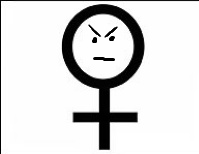
Here’s a picture of my face while I was reading it:

You might not think it, since I decided to stick a big picture of my horrorshock face in the middle of this post, but I’m terrified of having my photo taken. When it comes up, I am filled with bubbling anxiety and almost end up on the brink of tears. I don’t have any current photo ID because I hate the idea so much, and I have often ended up disappearing when among friends and the camera comes out.
It started some years ago. I won’t go into detail, but suffice to say it involved a man, coercion, a camera and my naked body. Since then, I haven’t exactly had the association of cameras with male control of me broken. I often encounter cameras in my interactions with the police: they photograph and film me and people like me to keep us in line. It’s a threat, the way police hold the cameras: we are watching you, and we will attack you and say you deserved it all along. This method of using cameras has since filtered down to the kind of misogynist who likes to do the cops’ work for them, and will photograph and film those who call them out on their behaviour in an attempt to intimidate.
To me, someone taking my photo is therefore intrinsically linked with patriarchal control. Whether it’s sexual or behavioural control, it is an attempt to mould me into something that men want me to be: the quiet woman, the sexual object. They use the camera to position me into whichever roles they would prefer me to occupy.
It’s different with selfies. With selfies, I have complete control over my own image.
I suppose I started taking selfies when I realised there were some things that words couldn’t articulate well, and what I needed to say was best said with my face and body. When putting a webcam or a front-facing camera in front of me, I can see exactly what I look like, and make sure, before taking the snap that I look how I want to look and I am communicating what I want to communicate.
And that’s why I take selfies. Because it’s me presenting myself to the world in the way I want to be presented.
I am not filtered through a male lens into what these shutterbug Pygmalions want to see. It’s just me and my message.
Wafting across my monitor like the diffusion of a singularly sulphurous fart comes this article, which the Guardian saw fit to run on their front page today.
An article about safer sex ought to, by rights, display a fairly grown-up attitude towards safer sex. Unfortunately, this doesn’t. It opens with a lot about how “hilarious” condoms are. There’s little explanation as to why, just repeated exclamations that they’re funny. Further compounding this rather worrisome attitude is a reference to the “clap clinic”, which I can only presume is a rather stigmatising way of describing getting oneself checked for STIs regularly. On top of all of this, it spreads misinformation, referring to the practice of “double-bagging”–wearing one condom over the other is a terrible idea, unless you like condoms to break on you. Of course, it’s hardly surprising her attitude is so bad: in the last paragraph, the author expresses surprise that adults ever use condoms.
While there are some decent points made, like the impact of condoms on pleasure, on the whole the piece is rather lacking. The author concludes that better condoms are needed rather than a better attitude to them.
Unfortunately, a magic super-condom that’s thinner probably won’t make much difference. I remember about a decade ago when Durex launched a condom which was supposedly far better and made from a different material. It didn’t wow me, and, crucially, it was way more expensive than the bog-standard model. For students and working class people (who dance and drink and screw because there’s nothing else to do), this is not going to help matters at all.
Ultimately, this article represents one of those well-intentioned things which contributes to a poor societal attitude towards condoms. It just adds shit to the pile of excuses that people use not to wrap up and play safe. The fact is, barriers like condoms are the best thing out there if you don’t want STIs. They don’t protect against everything–such as HPV (although the author seems to think they do, mentioning something about genital warts)–but the protection they offer is pretty good. They’re also pretty cheap and readily-available, and fairly portable because they’re small.
So basically, I’d love to see less misinformation in the mainstream media. It’s not a big ask, surely; it’s no like there isn’t a massive host of sex educators doing good stuff. Fuck controversy, and fuck ironic hipster bollocks. Let’s celebrate condoms, the unsung heroes of sex.
In a desperate attempt to get past the tedious arguments that keep hampering our progress in actually Getting Shit Done, I’m going to say this, and then every time it crops up again I can whap this out and be all like “ta-da! Here’s my opinion, now I’m going to go back to bed.”
Today it’s Lily Allen putting out a music video that women of colour feel reflects another manifestation of white supremacy. Yesterday it was some other music video, the day before it was a newspaper column, and before that it was a thing on telly, and basically what I’m saying is these arguments happen again and again. It goes like this:
I was once one of the people who lathered, rinsed and repeated steps 4-7, so I can see exactly how it happens. It’s nice to enjoy something. It makes you feel good. And you’re a nice, good person. Also, racism and transmisogyny and sexism and ableism and bourgeois dickholery are generally pretty awful. So, it logically follows that because you and the way you feel are good, and oppression and supremacy are bad, the thing you like can’t be any of those things.
Except that’s not how it works. That thing you liked? It’s not a part of you. You almost certainly, in fact, had no creative control over it. Instead, it was created by rich and privileged people, far far away. Chances are, they’re not big evil hood-wearing KKK members either. They fucked up, because privilege kind of does that.
The people who are criticising it are those who have to experience oppression. This means they’re a hell of a lot better at spotting it than privileged people. They are probably right here, far more likely to be right about this than you, the fan.
So do you need to stop liking that thing you like? Hell no. I recommend you read this excellent guide: “How To Be A Fan Of Problematic Things”, which guides you through the process of actively critiquing pop culture, starting from this position:
Liking problematic things doesn’t make you an asshole. In fact, you can like really problematic things and still be not only a good person, but a good social justice activist (TM)! After all, most texts have some problematic elements in them, because they’re produced by humans, who are well-known to be imperfect. But it can be surprisingly difficult to own up to the problematic things in the media you like, particularly when you feel strongly about it, as many fans do. We need to find a way to enjoy the media we like without hurting other people and marginalised groups.
So please, please, please let’s stop having this wearing argument. While liking something problematic doesn’t make you a shit, having this argument pisses people off. It pisses off the marginalised voices we need to hear more of in feminism. It pisses off people who are subject to oppressions. It pisses off everyone who’s had to sit through this nonsense more than once–on both sides.
Let’s just listen to what’s being said, understand it and engage with it, and then enjoy our favourite things with a more critical eye.
It’s no secret that, like many other feminists, I’ve been somewhat sceptical of the No More Page 3 campaign. Since its inception, I’ve been squabbling with liberal bourgeois feminists about the worth of pouring so much time and energy into getting rid of a single, solitary page of a single, solitary newspaper.
The thing is, I love to be proved wrong. I really, really do. Just once, I’d love for my critique of something to turn out to be completely off the mark. Just once, I’d like to be able to say “Whoops, my bad, I’m a pessimist, I expected the worst and that didn’t happen.” Just once, I’d like to be unassailably and objectively wrong in my doomy, doomy predictions. But no. I’m fucking Cassandra.
The main defence used by NMP3 supporters is that the campaign has “popular support”. And they’re right about that, I suppose. They’re popular among the high-profile media feminists. They have the support of charming individuals like Alastair Campbell. And they even have trade union support! The official campaign website trumpeted proudly about UNISON passing a motion in support of the campaign. Unfortunately, they remained rather tight-lipped about another motion rejected at the very same conference: where UNISON voted against starting from a position of believing women who reported gendered violence.
This strikes me as pursuit of popularity at the expense of getting anything done. Yes, they have some big-name backers, but many of their big-name backers are demonstrably no friends of women, and no allies in the fight against structural misogyny. And all the while, the Sun is continuing to print things which make the lives of many women actively worse, dumping all over poor women, disabled women, women of colour. And Page Three is still going strong.
We need to ask ourselves why NMP3 is so popular. On the face of it, it seems quite nice that a campaign resonates with everyone. However, let’s take a minute to think about who this “everyone” includes. This is a cause that has united a warmonger, a union that doesn’t think rape survivors should be believed and Caitlin fucking Moran. And the reason that they’re all united in their opposition to putting a pair of tits on a particular page of a particular newspaper is because No More Page 3 isn’t creating a challenge against patriarchal hegemony.
Gaining popular support, by default, means making oneself as palatable as possible to the status quo. It means becoming appealing to those who directly benefit from the structures of power and privilege, so that they will allow you to have your minute on a soapbox with your paltry demand.
It will never be popular to articulate a structural critique which highlights how things are broken and wrong all the way down, because that means that major changes will have to happen. With mass communications controlled by the most privileged, the message will not get out through these means. With a system of government controlled by the most privileged, the changes will not come through this channel. With businesses working only for themselves, they will only do the best thing for themselves.
Some may decide it’s worth it to work within this system anyway. Perhaps they knew all along that what they wanted posed no direct threat to the status quo. Perhaps they watered down what they wanted to make it sweeter. Either way, whether they win or lose, little difference will be made.
But for true change, to really dismantle these structures of power, a lot more is needed. We need to be creative and robust with our demands. We need to be fearless: we will be loathed and despised by the powerful. What has been won so far was not won by being popular, and we still have a long way to go.
Let me tell you something about me. I let you see the flashes of rage, incandescent anger which invigorates me. It comes, it builds, it explodes like an orgasm and I collapse into momentary catharsis. It’s not a good feeling but it’s better than the alternative.
Most of the time I’m bored. I’m bored and I’m tired. It is grindingly wearing simply existing in oh so many spaces. It’s exhausting and tedious having the same fucking arguments time and time again, not managing to chip away at the immovable force.
It happens a lot in anarchist and radical spaces. The men don’t like it when you challenge their supremacy. A few weeks ago, all of this happened, and it was dismissed as nothing. Now we’re being told we should listen to some sort of TV celebrity because he made some vaguely supportive noises on some issues. From microaggressions to outright misogyny, it goes and goes and goes and it repeats and it repeats and it’s just fucking tiresome.
Social justice circles are no better. Too many feminists think they can get away with kicking down, not up and we’re expected not to challenge this because they’re making some vaguely supportive noises on some issues.
It’s a sinkhole of solidarity, that’s what it is. Unidirectional. I will pour my solidarity behind their causes and yet, do they ever have my fucking back? No. I am a trouble-maker, I am a monster, I am a liar.
There are so many privilege metaphors I could think of. I am Ginger Rogers, backwards in high heels and I want to kick off my shoes and sit down. I am being told the game is easy by someone who is playing it on easy mode and I want to throw my controller at their fucking stupid smug head. I am being attacked by an evil invisible zombie horde who are all armed with chainsaws and also invisibility lasers and I am too tired to make up a metaphor which actually makes sense.
I have goals in common with a lot of awful human beings. Why should I be expected to dash myself against the rocks repeatedly to support them while they would never do a thing for me? Why is it that I am expected to undertake so much thankless emotional labour, and if I don’t then I am the unreasonable one? Why is it me who has to do the heavy lifting?
And I know I’m better off than some. At least I’m white. At least I’m cis. At least my disability isn’t too bad. At least I have a livable income. And I try to do what I can to help with the heavy lifting in the struggles of those who get more shit than me. And for some reason, I have more energy for this than I do with the banal struggles of my own. It’s easier to direct my own limited resources into people who need my solidarity rather than the solidarity-suckers with all of their privilege.
What I need is something that I cannot foresee happening. I need for what I am fighting for to be understood. I need to be able to move freely, not to be constantly hampered by the same petty squabbles over what should be a tiny amount of ground. I need those with the capacity to take up the heavy lifting, I need support and to know that others have my back when I challenge the terrible or even just the mundane.
We need a revolution, but before that happens, we need to clean out the shit in our own back garden, because if it’s a tiresome struggle to simply exist amid fellow revolutionaries then it’s not my revolution.
So please, please can we start with the banal, before we expand to the grand? I am aware that for a lot of people, this will be unpleasant, and will require taking on a higher degree of emotional labour than they have ever tried before. But this is how so many of us live day to day, simply to negotiate spaces. It is this dynamic that needs to change, needs a complete inversion.
I know this can happen, because those who I can trust do so. There are some who fight at my side who are supportive and make the fight feel winnable. These few who have my back are unquantifiably precious.
I have seen so many people fall from sheer exhaustion, from being hounded out of spaces. Voices silenced and bodies taken out of the fight because some would rather maintain and replicate hegemonic power structures within spaces rather than challenge them. I haven’t succumbed yet, mostly because I’m fucking stubborn and I don’t want to let the bastards win. But it hurts. It hurts my soul and it hurts my body, and I’m bored and I’m tired.
Further reading:
No doubt a lot of you will have seen the front page of the Sun today, announcing that people with mental health problems are big stabby monsters who will murder you. If you haven’t, this is literally their front page.
I have the “privilege” of peeping behind the Scum’s paywall, so I checked out the article. It will surprise literally nobody that the data are totally wack, and to make up for the lack of content, the Scum added a lot of pictures of pretty girls who were killed by the scary mentals. Oh, and in a particular double V-sign, they then add a small box pointing out that people with mental health problems are more likely to be victims of crime than perpetrators.
If you’re interested in the actual facts surrounding dangerousness and mental health problems, you can download a fact sheet here. In short, even the Sun can’t manage to substantiate their front page claim.
But here’s the thing: it’s pretty easy to attack the figures, because they are a nonsense. But in doing that, we lose sight of what is really going on here. We stop asking the questions that need to be asked. Why on earth would the Scum decide to whip up a panic about people with mental health problems?
We live in a society where there is a vast stigma surrounding mental health. Small gains are occasionally made: nice national treasure celebrities can now talk about their depression and so forth, and a fuss might be kicked up about naughty supermarkets selling nasty costumes. It really isn’t enough, though, and as we dig our way towards being treated with basic human dignity, we hit wall after wall after wall.
Our mental health marks us as other, and we become acceptable targets in a society built around kicking the marginalised at every opportunity. It is no surprise that it is the oppressed who are scapegoated for everything that happens, and not the privileged. It is no surprise that the Scum decided to pick the weak rather than splash THOUSANDS KILLED BY MEN. It is no surprise that this will go far less challenged than the fact that they print pictures of norks on the third page.
If the climate of fear remains, we will remain alienated. This stigma can kill. It keeps us lonely, stops us from healing, and it blames us for our own isolation.
And this allows those with the power to continue doing what they’re doing, to maintain their chokehold relatively unchallenged. They are able to perpetrate these assaults, and we continue struggling uphill to fight against tropes that should have died a long time ago. It keeps us down, it keeps them up.
Does it terrify those with the power that the oppressed are gaining a voice? I think it does, and this is why they keep turning up the volume on their attacks. They are scared of us, and want everyone else to be, too. It’s working, perhaps, and that scares me.
The Scum have a rich history of lying about those without power. We know this, but we choose to attack the easy bit rather than the harder bit: that society is built this way, and needs so much to change before most of us can exist comfortably within it.
Use the Sun as kindling, but there’s a hell of a lot we have to burn.
HEY GUESS WHAT EVERYONE, THE DAILY MAIL ARE BEING MEAN ABOUT A DEAD WHITE GUY.
WE SHOULD, LIKE, SET THEM ON FIRE OR SOMETHING.
Forget about the woman they hounded to death. Or the relentless racism, the vicious homophobia, the rampant misogyny, the perpetual incitement to violence against anyone marginalised.
Now they’re being mean about a dead white guy, that’s just a step too far.
Yes. You may say you were pissed about all of those things, too, and that this is the last straw. I get that. I really, really get that.
But here’s the thing. Most of the evils of the Mail are not actually this particular newspaper. The Mail, for the most part, is a dark mirror which reflects disgusting attitudes which pervade society. It phrases them a little more bluntly than many are comfortable with, perhaps, but it is just an amplification of prejudices which already exist. The Mail didn’t invent xenophobia, it merely turned up the volume.
It is only really for white dudes that the Daily Mail is creating any kind of novel hate. For most of us, it’s just repeating the same hate we hear every day, in a louder voice.
It’s not the Mail that’s the problem. It’s fucking kyriarchy. And unfortunately, that’s too hard for a lot of people to attack. And so we have a moan about the Mail–god knows I’m as guilty of this as anyone else–rather than the social conditions which produce the bile that they spout.
It is the death of these conditions, the death of bigotry, the death of kicking down that needs to happen, not the death of a particular newspaper. The world around us is far uglier than a Daily Mail editorial if you allow yourself to see it.
 Another angry woman