Guest post: The same Online Wimmin Mob in hardly-even-different packaging

This post is by @jonanamary, who doesn’t have a blog. She’s ace. You lot will like her.

Content note: this post quotes examples of ableism with uncensored slurs. 

I’m in two minds about writing about Peter’s blog post on call-out culture, because my previous encounters with the author have been… bruising, and very unpleasant. Drawing further attention to the piece also seems counter-productive. However, as he has chosen to write about things I have said, but in a distorted and inaccurate way, I feel I have no choice but to engage to some degree – especially as a comment I left on the article setting out my version of events was not published. The piece is also full of logical fallacies which are worth highlighting, and is more of the same old Online Wimmin Mob shit in a hardly-even-different type of packaging; very, very tedious.

Here we go, then. Peter’s words in red.

 “1) Are teenage girls really a persecuted minority?” – yes, especially in the context of their musical taste. I’ll leave the explanation to the marvellous, fierce Natalie Zed.

 “3) What in general gives you the god-given right to criticise me in this way, and what response do you expect?” – a response that engaged with the issue raised, rather than dismissing it out of hand, maybe?

(Oh, but maybe I’m just bitter; Peter aka @PME2013 was, after all, rather unwarrantedly nasty to me after the Moore-gate episode, after rather a bizarre conversation in which he insisted that “nannying” does not have gendered or sexist overtones – a point he repeats in this blog, for good measure. What can one say in the face of that level of denial, really?)

Sigh. Continuing:

“It is a feature of the medium that people exchange views, argue, and leave more convinced of their own opinions than before. [He’s universalising – I have had my mind changed on many issues due to great conversations and arguments on Twitter, and I know I am not alone.] Fine, it’s not for me, but I’ve no issue with it. [Clearly, he does, as this whole blog shows.]

“I’m talking instead about people criticising and sometimes attacking others for their use of language and daring to express themselves in the natural terms that people do every day across the country.  I’ve seen it time and time again: people leaping on others and chastising them as if they were small children who had been naughty for the words they have used.” [My emphasis] – the sheer ignorance involved in describing language of any kind as “natural” boggles the mind. If there is anything more constructed, more socially situated than language, I can’t think of it. Language is anything but “natural”, and to describe it as such is either dishonest or depressingly naïve. Is it “natural” when, for example, schoolkids use the term “that’s so gay!” to express distaste – does the term stem from the “natural” inferiority of gay people? Of course not – it reflects a societal attitude that is hostile to non-heterosexual identities.

His denial that “hysterical” or “nannying” aren’t sometimes used in harmful ways is rather sad. Feminists, even we Online Wimmin Mob types, don’t generally object to “hysterical” being used to mean “funny”; we object when it is used to refer to the behaviour of a woman who is deemed to be acting “excessively”. To state it more clearly, I have little problem with the sentence “that comedian I just saw was hysterically funny!”; I have rather a lot of problems with “that female MP’s argument was shrill and hysterical“. Oddly enough, Peter does not address the second meaning of hysterical. Likewise,“I did a nannying job for a Parisian family last summer” = not objectionable; referring to our hypothetical female MP as acting in a “nannying” way is much more problematic, as it calls upon a long history of tropes of smothering, overbearing women, who can easily be dismissed. How is that not sexist?

I saw one person lecturing another recently about the other’s use of “delusional” and “idiot”” – hand up, I was the person he is referring to here, but I – and the other person involved in the original conversation, the fabulous @TheNatFantastic – utterly reject Peter’s characterisation of our interaction as “lecturing”, here. I know that Nat is anti-disablism, so when she used those words, I gently and (in Twitter terms) privately gave her a heads-up via a direct @ (rather than a .@) that only people who follow us both would have seen. (Incidentally, Peter makes a point of noting that I don’t follow him in reference to the “nannying” incident – IIRC I saw his post because someone retweeted it into my TL. My tweet to Nat re “delusional”/”idiot” was not RT’d, so only by going to my Twitter stream could he have seen it. Slightly creepy, huh?)

Anyway. Nat responded quickly, the issue was settled in minutes, and we both moved on with our lives. Except not, because it’s now being dredged up days later and twisted into an example of LANGUAGE POLICING OMGGGG when it was a more-or-less private, and definitely civil exchange that ended swiftly and with no aggression or aggravation on either side. Peter later added a note to his blog, which said: “One asked me to remove this part of the post, or to make clear she was happy to be lectured to.  Fine: she was happy to be told off in public.  Plenty of people aren’t.” – so why keep it as an example when it manifestly is not an example of the kind of interaction he is describing? It’s dishonest. (He also told us off for using Naughty Words; that kind of language policing is totally fine, it seems. As long as it’s him doing it, of course.)

More:

Interestingly I’ve a real life friend who has been sectioned twice, who has blogged brilliantly on her experiences, in the process no doubt helping and educating many, and who light-heartedly refers to herself as a “loony” on Twitter. I’d love one of the Twaliban to stumble on her by accident one day, and watch her response if they attacked her for her own very deliberate choice of language.” – here Peter shows his ignorance of disablist issues, as well as his ignorance – again – of how language works; he thinks that I, and other “Twitter Twaliban” (not making that up) members, would be upset to see a word that has been used as a slur being reclaimed by a member of the group that it affects. How little he knows; I follow disabled people who happily refer to themselves as “crips” or “mad”, and am not at all shocked by their choice of words. Much as the word “bitch” can be empowering when used by groups of women (e.g. Bitch magazine, or the excellent Smart Bitches Trashy Books blog) or a misogynist slur when shouted at me on the street by a passing stranger, context matters.

 “This is a key thing to remember too: the Twaliban member is frequently taking offence on behalf of unnamed people in a group who might theoretically be hurt if they read the guilty party’s tweet, which contains language that they don’t approve of” – jeeeez, what part of “reinforcing structural forms of oppression” doesn’t he get? The language we use matters; if it didn’t, why bother writing his blog in the first place? Casual use of disablist slurs reinforces society’s constant drumbeat message that disabled people are “less than”; given the demonisation disabled people face from all quarters at the moment, a movement against disablist language seems more vital than ever. How does Peter think societal change is effected, anyway? Oh wait, I forgot; he thinks language choices are “natural” and therefore beyond criticism, but also “a diverse, powerful, creative thing”. :vanishes in a puff of illogic:

 “the point is that intent is highly relevant” – oh lordy. It’s at this point that I think I must throw my hands up in despair. Melissa at Shakesville has a post which could have been tailor-written in response to Peter’s maunderings, so I’ll let her have the last word on that point.

 “I do genuinely think I have the right not to be told off repeatedly for my language, mainly by strangers, when I am hardly tweeting the most offensive content.” – how many times must it be said that “offence” isn’t the problem – oppression is? If Peter tweets in favour of, say, same-sex marriage, this is hugely “offensive” to large numbers of devout religious people who earnestly believe it is against their faith – but I hardly think he’d agree with the idea that he should self-censor his public support for the concept as a result. So why the double standard? “People are scared to speak on a medium that’s all about the free flow of thought and speech.” – well, the free flow of speech that does not challenge Peter or his mates, that is. It all becomes clear!

The final final word goes to my friend Tom, on Peter’s …interesting… use/misuse of logic:

 Was going to go through the whole thing as a logic revision exercise but I lost patience with it. I found:

Naturalistic fallacy (It’s NORMAL for people to use these words so it is OK to do so)

Ad Populum (The majority use these words/are not offended so it is OK to do so)

Fallacy of composition (just because his friend is comfortable with referring to herself as a loony it doesn’t mean that all people with MH issues are going to be comfortable with it)

Poisoning the well/genetic fallacy (Discrediting arguments because they come from twitter)

Ad Hominem (even though he never mentions anyone’s name, the “Twitter Taliban” is nothing more than an attempt at a personal attack)

Improper appeal to authority (his argument that “retard” is a medical term used by WHO doesn’t impact it’s offensiveness/the intent with which it is often used in every day speech)

There are numerous other problems with it, but these are just the fallacies I managed to identify with help from my crib sheet. I probably missed loads because I only skimmed the last half.

What the fuck, York Uni?

So, for some reason, York University Students Union is refusing to support a new Feminism Society. Their reasoning is fairly nonsensical, saying that the Women’s Committee branch of the union does pretty much the same thing so there’s no need for a feminism society.

Which would be all well and good, if, you know, having officers responsible for making sure equality on campus and having a space for feminist discussions was the same thing. Which they aren’t. Obviously.

Anyway, feminists in York are rightly pissed off at this nonsense and trying to make some noise. I support their attempt to get recognition and a space to meet.

Give them some friendly words if you support them too, and you might also be interested in signing this petition.

RadFem2013 cancellation: the plot thickens

So, the plot thickens around the cancellation of the RadFem2013 conference. The booking agency who handled the booking say the following:

The booking with Off to Work, based at London Irish Centre, was going ahead with the Radfem2013 organising committee, who are professionally organising a successful event for the Radical Feminist Community. The organisers were completely transparent about their conference and we have no criticisms to make of them and we have no opinion at all about their political analysis.

Allegations that some media sources and bloggers are putting forward about the reason for the decision having anything to do with their political analysis, opinions, “hate speech” or the conference being in breach of legislation are completely false. Our partner, The London Irish Centre, is in agreement with us that these allegations are not the reason for this suspension. The reason, as outlined to the organisers, are specifically around the safety of staff, the overall ability of the centre to logistically manage the booking, and the level of disruption that a small group of protesters have caused. We support the conference going ahead and we are working with the organising collective to find a way forward to ensure that this happens.

This differs enormously from what the London Irish Centre said, which I quoted here. In short, the venue said that their booking subcontractors have relative freedom to book what they choose, but that if a booking goes against their policy, they will point it out to the bookers. Furthermore, they said that RadFem2013 violated their equality and diversity policy.

So it’s kind of hard to work out what’s actually going on here. There are two possible options:

(1) London Irish Centre are fibbing when they say it was an equality issue, perhaps to appear brave as they really pulled out due to MRA intimidation.

(2) The booking agency are fibbing, to keep clients happy, so they don’t look like the sort of agency who just book a hate rally without vetting their bookers in the slightest.

If the first is true, shame on London Irish Centre. Shame on them for ignoring the work of activists in pointing out that there are indeed equality concerns around RadFem2013 which are against the law. It’s worth noting that one of the organisers has outright said that trans women are excluded from the event. So yeah, shame on London Irish Centre for not listening to marginalised voices, but instead listening to MRAs.

And shame on the MRAs for attempting to intimidate. We all know they are lower than dirt, and their attempts to harass are repulsive and repugnant. They are vile.

In short, the first scenario is pretty fucking bleak, and what’s particularly unpleasant about it is that the people who are most affected by RadFem2013’s policies and the behaviour of its organisers are being completely erased. I suppose that’s not surprising, given many of RadFem2013’s supporters and organisers want to erase trans women, and the MRAs want to erase all women (which, of course, includes trans women), and the venue is kind of just going along with these horrible agendas.

The second option allows for a little more faith in humanity, and, in my view, is more likely to be the case. By this token, only the booking agency–and the small groups of nasties representing both RadFem2013 and the MRAs–are trying to save face. It’s a convenient fiction for all of these parties, and I’m surprised it took Off To Work so long to concoct, since the MRAs claiming credit and RadFem2013 giving them the favour of letting them keep this credit has been going on for over a week already.

As far as I’m aware, no matter how much both MRAs and RadFem2013 claim that everyone agrees with them, they’re wrong. A small number of bigots agree. A far larger number disagree with both RadFem2013 and the MRAs, and we attempt to fight for a feminism which includes all women, understanding that no woman is free until all women are free and struggling for a liberation for us all. But then there is the vast majority of the population who, sadly, do not care at all. That a spat over a booking of a building is essentially trivial. This is why I suspect that there is nothing fishy going on, but, rather, a booking agency trying to save face. To say anything otherwise requires crediting MRAs with far more influence than they have. They are growing increasingly irrelevant as feminism–inclusive feminism–is gaining strength.

Whatever is true about the booking of RadFem2013, it has brought out the worst in some very unpleasant people, and I’m dreading to see what happens next.

Shitbrained bollocks of the day: fanny edition

Leave it out Stavvers, it’s not worth it, my inner monologue screams.

But no. No irritation too small for me. No tripe too trivial to miss the opportunity to open dialogues which are missed by the mainstream. Today is some utter bollocks in the Guardian (as it so often is). It’s title is mercifully reflective of its content: “Shame on those who practise intimate cosmetic surgery“.

It’s not often that a piece of shaming is so helpfully labelled, as make no mistake, this is what the entire article is about. And no, it’s not about shaming cosmetic surgeons who practise it, which would be, while still problematic, a little better. It is by someone who thinks she’s being funny, shaming women for wanting to have cosmetic surgery on their genitals. Cis women. It’s abundantly clear by “women” she means “cis women”, as these sorts are wont to do.

Now, there is a conversation to be had about cosmetic surgery on cis women’s genitals, the kind of thing which is done entirely for aesthetic reasons. Most of the surgeons who do it are men who have never had a cunt, and most of them thing that what they’re doing will have no effect on sexual pleasure, which is something a lot of people with cunts disagree with. They’re also doing it for money, profiting off of a beauty ideal which they themselves helped create by performing similar procedures on porn performers, which is, a lot of the time, the only cunts that heterosexual cis women get to look at. They’re creating a need for a product they provide, and it’s a vicious circle and it’s fucked up and let’s not even begin to unpick all of the intersecting bollocks: why is that ideal cunt image we’re sold a white woman’s cunt? Why don’t we talk about how much the medical establishment fails trans women? To have these conversations, we cannot shame people for taking the bargain of undergoing these procedures. It’s fucking complicated, it’s fucking structural, and nothing’s going to change with shame.

Alas, this is not the conversation the Guardian wants to have. The Guardian’s conclusion?

That it would be nice if more boyfriends said they liked their partner’s cunt.

I despair, I really do.

RadFem2013 vs the MRAs: what really happened and who’s the baddie?

For the second year running, the RadFem conference has lost its venue. It’s been difficult finding out the long and short of it, as the conference organisers are claiming that men’s rights activists (MRAs) are responsible, and the MRAs are also claiming victory, and there’s little from the London Irish Centre itself. The RadFem2013 line is that they were subjected to harassment from MRAs, while the MRAs claim that they spearheaded a campaign. I’m not going to link to any statements from either, as both are, in my view, hate groups.

Unfortunately, the only statement I could find from the venue itself was unhelpfully in the Times, hidden behind a paywall, which means that both RadFem2013 and the MRAs can continue to push their own narratives. Luckily, I can get behind that paywall, so here’s what the venue had to say (ETA: Screenshot of the Times article part 1 and part 2, courtesy of @WeekWoman):

“Quite a few of the complaints were from the transgender community and then a men’s group came along the other day to hand out leaflets about why the event should not be held here.

“While our commercial bookings subcontractor [an events firm called Off to Work] has a certain amount of freedom to use the centre when we are not using it for cultural events, if it comes to the charity’s attention that an event goes against our policy, then we will point it out to them.

“We did some research into RadFem and discovered certain language was used and some statements were made about transgender people that would go against our equalities and diversity policy.

“We have discussed with our subcontractor Off to Work how to avoid such confusion in future and have strengthened our internal communications as a result.”

Well, that clears matters up nicely, and thank you, London Irish Centre, for clarifying what actually happens. A pity I couldn’t find this important information anywhere else except behind a fucking paywall.

So, it appears that for the second year running, the venue pulled out because of RadFem2013’s transphobic stance, where, once again, trans women will be excluded from attending. Speakers at the conference include academic transphobes like Sheila Jeffreys, and more dangerous transphobes like someone whose name I am actually scared to mention because she has a history of endangering trans and queer folk because the hate runs so strong in her. This is not an exaggeration. That person has a habit of doxxing anyone she suspects of being trans, calling employers, and sometimes even schools of trans and queer folk. If anything, London Irish Centre are understating matters when they say that the RadFem2013 conference goes against their equalities and diversities policy. To some women, the RadFem2013 conference organisers and speakers are a persistent and dangerous threat.

But does this make the MRAs the good guys here? Fuck no. Their beef with RadFem2013 went as far as “waaah we hate feminism”. They merely opportunistically used the trans exclusionary nature of the conference as an excuse to push their own agenda. They’ve made their own problem clear in their correspondence with London Irish Centre–at least, the information they’ve provided online. And much of it is tedious concerns about misandry, and the Waahmbulance Service must be pretty stretched about this.

Of course, that MRAs might be driven to picket feminist events is a cause for concern. This is something that trans activists and feminist allies never did, mostly because we’d all planned to do something nice that day, something that didn’t involve sitting indoors listening to bigotry (last year, I sat in the sun and ate ice lollies and read a good book). We shouldn’t not object to MRAs showing up and picketing a feminist event just because this particular feminist event was direly oppressive. Now they think it works, they might just do it again, and that’s the last thing we fucking need.

From their own words, it looks like the MRAs consider trans women to be their allies for exactly the reason RadFem2013 organisers think trans women their enemies: both sides fall prey to the fictitious narrative that trans women are really men. In another life, these two bands of bigots could be friends, and were they to put their resources together they would become even more terrifying. I hope RadFem2013 giving MRAs the credit for something they didn’t do isn’t the beginning of an alliance forming.

In amid the hubbub of claims of responsibility, though, once again the work of trans activists is erased. It was trans activists, after all, who did the bulk of the dialogue with London Irish Centre, for it is trans activists who would be harmed by this conference going ahead. No platform for fascists, the activists said, and eventually, the venue listened. It was not the MRAs with all their spite and noise who won this. It is people who have been–or fear they will be–affected by the hate spouted by RadFem2013.

The narratives presented by both RadFem2013 and MRAs serve only to obfuscate the truth: that feminism is moving on from bigotry and gaining strength by the day, and the bigots are running scared as they feel their dominance slipping away from them.

Further reading:
UnCommon Sense: TERFs, MRAs and lies about trans people.

UPDATE: The booking agency have also given the MRAs credit. Read more here.

Note: Comment thread is, of course, moderated as best I can. I might have had a few slips, but I’m going to be careful right now. Stay on topic, and if you’re from either of the hate groups discussed in this post, your comment isn’t getting through, because no platform for hate. This is my space, not your personal place for airing grievances. 

Polyamory, Mick Philpott and abuse apologism

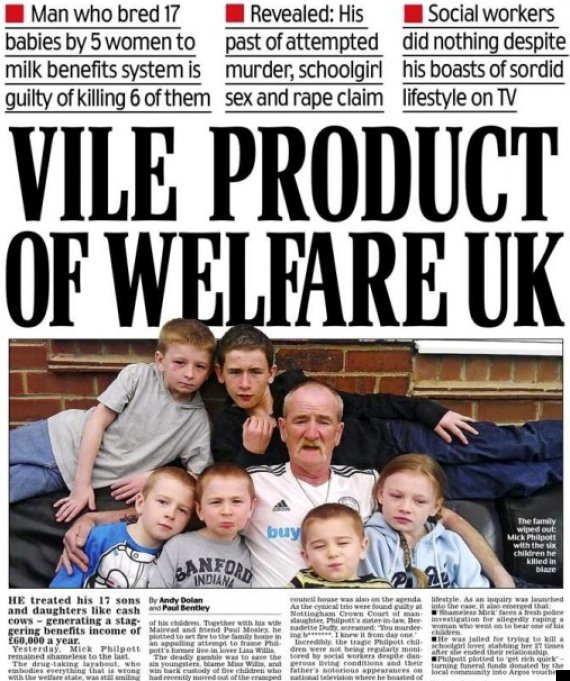
The Mick Philpott case has provoked a rather repulsive reaction. The Daily Mail’s now-famous front page blaming benefits has had its sentiments echoed by Osborne and Cameron. Meanwhile, the BBC has taken a different tack, and decided to blame polyamory.

Yes, really. Apparently, according to an expert who cannot tell the difference between polygamy and polyamory, repeated by a journalist who also cannot tell the difference between polygamy and polyamory, the relationship between Mick Philpott, his wife, and his lover somehow “sheds light” on polyamory. Here’s a little snippet of a quote from our resident academic expert in polyamory, Dr Thom Brooks.

“The two are practised very similarly and [are] almost always a relationship of one man with two or three women, with the man at its centre,” said Dr Brooks, of Durham University.

Er, no. I’m not quite sure where Dr Brooks has been getting his data from, but it looks like he’s only been bothering to investigate “polynormative” relationships and ignored the vast rainbow of experience of polyamory (however, it might explain why he seems to think polyamory and polygamy are interchangeable). This goes a long way to explaining the drivel he and the article’s author spout to try to paint Mick Philpott’s relationships as in any way representative of the poly community.

Yes, in some poly relationships there is a gender and a power problem, and in some poly relationships there are partners who just go along with it because they feel as though they do not have any other options. This is not a problem with polyamory. This is a problem with patriarchy.

Tellingly, what’s missing from this article–and, indeed, from the rags and politicians’ blaming of benefits–is block any attempt to address what was actually going on. The words “domestic violence” and “abuse” do not even appear in the BBC article, and probably don’t appear in any of Osborne regurgitating the Daily Mail and pretending it’s politics.

And that was what was going on. Abuse.

To ignore it, to clap your hands and say “hey, look, over there!” is to block addressing any discussions of the shocking prevalence of domestic violence, to ignore how frighteningly common this gendered abuse is. It is hardly surprising that they are doing this: there are agendas at play here.

For benefits, it is clear that those with the power wanted to attempt to smear any person requiring support to survive so they can continue to get away with their economic violence against vulnerable people. And for polyamory, it’s the same old bigotry and hatred against any sexual relationship other than the state-approved monogamous relationship between the “right” sort of people (usually these couples are a cis man and a cis woman, but they will grudgingly make concessions for trans people and same-sex couples who don’t rock the boat too much). It is a powerful tactic to associate whatever target it is with someone who killed children, and it is a foul tactic, instrumentalising the deaths of those children to make an attack.

The other agenda is that, horrifyingly, there is nothing newsworthy and exciting for the increasingly-irrelevant traditional media about yet another instance of abuse. It is something that happens every fucking day. It does not titillate, nor thrill, so they seek out more sensational angles, no matter how far they are from reality.

Ignoring the abuse ends up normalising it. It is something which passes almost without comment, as it has been so thoroughly obfuscated by the sensationalist line. It screams “this is not worth addressing”. And in ignoring it, it almost excuses it. It is apologism by neglect. It is a failure to draw attention to abuse and the structures in society that support it, the horrible frequency of these experiences which differ only in scale rather than substance.

This is, in its own way, another agenda in and of itself. To protect the system which allows men to exert power over women, and there are those who are relishing the conspicuous media silence. I don’t doubt some of these people actively brainstormed distractions from addressing the abuse.

It is often said that it is silence which allows abusers to keep abusing. This is as true in the orchestrated distraction from abuse as it is anywhere else.

The problem with the word cis

Content note: this piece discusses transphobia and suicide. 

This piece is co-written with Cel West, who is an activist and feminist both online and off, and who tries to write about trans issues as little as humanly possible.

The New Statesman editorial team have decided to publish yet another word-turd whining about privilege-checking. We wouldn’t recommend reading it, but if you search “Online Wimmin Mob”, you’ll see exactly the level of contempt its author has for anyone who has had the misfortune of engaging with her online–if indeed anyone has: all of the examples she provides take place in the realm of pure rhetoric rather than linking to specific examples of what has actually been said.

The discussion of anger and frustration is one that has been had a thousand times before, so we’ll just link to Stavvers on being angry one more time. Let it be said, once again, though, that it’s a thing that happens time and time again, to feel furious at privileged people refusing to check their fucking privilege once again, and that it’s really, really fucking tiresome to see them calling the tone cops across a national, high-profile news website over and over and over and over.

A lot of cis women have a problem with the term in a way they can’t quite fathom. Well, I’ve fathomed it and I’ll tell you: because it’s a name that has, once again, been conferred upon a certain group of women without their consent. It would still matter, although infinitely not as much, if a Twitter search of “cis” demonstrated that the term is mostly used in a sisterly and affectionate manner. Nah, more like “cissexist”, “cisfascist” and, in one case to a certain Laurie Penny of this parish, “f*ck off cis girl.”

And that’s the stuff I didn’t search for, I just happened to see it on my feed one Tuesday evening.

So forgive me if I hear “cis” as an insult to the very essence of who I am and then, when I complain, feel aggrieved that I’m not entitled to experience my discomfort because my “privilege” means that my point of view doesn’t matter and my opinions don’t count.

C: It’s hardly surprising that trans-inclusive feminists get angry when people wheel out the same old transphobic tropes. Here’s one: the term cis is an insult to “the very essence” of cis women; this directly implies that trans women aren’t real women. Another is the trope that spurred my tweet of “fuck off cis girl”: a direct response to the trope that trans women are inherently far more violent and dangerous than cis women.

That particular tweet was sent to Laurie Penny from a demo as I trembled with fear, self-loathing and suicidality as she publically turned away from her trans inclusive position to uncritically accept Suzanne Moore’s assertion that, because a dozen trans people and allies might turn up outside her publically announced event with placards, that Moore was so being threatened by violence and thus in danger for her life.

Ironically, that tweet not only lost me friends, including Laurie, but the outing it required led to me not only being spotted and condemned by radical feminists as part of their customary gathering of dossiers on trans activists (a similar process to that used by the fascist site RedWatch), charmingly dubbing me “an ugly man”; at the same time I was attacked by non-feminist trans activists using oddly similar misogynist tropes as “must be mentally ill”, having “no idea what you are doing”, and as “a danger to the cause”.

Yep, it’s almost as if these unconscious tropes lead to us doing the patriarchy’s work for it.

I’m going to step back from that particular drama for a bit and let a cis woman speak for a bit about “cis”.

Z: Yeah. That cis girl doesn’t like being called cis. That cis girl doen’t like being called cis, because she never chose to have that term thrown at her, because it reminds her that she’s privileged and (incredibly mistakenly) thinks that that’s why people are pissed at her and don’t think her view is valid (actually it’s because she’s wrong).

The author has completely failed to understand the function of the word “cis”. It is not used as a stick to beat the egocentric trolletariat or other general bastards. It is word which restores linguistic balance. Before “cis” came into use, there was “trans”, and a plethora of slurs, and… nothing else. No label signified normality. There were the freaks, and there were everyone else. The word “cis” exists to amend this, however imperfectly. It was incredibly useful to me when I learned that word existed. It made it easier for me to challenge my own prejudices.

When someone is more offended by the words cissexism or cisfascism than the fact that these problems exist and make life really shitty for trans people, there is little that can be done to rehabilitate them. Yet the author, and other cis people, some of them feminists, still strongly reject having the label cis applied to them. How many of them were outraged at that Julie Burchill piece, which included a line about how much she hated being called cis?

It ultimately all comes from the same line of thinking as that which drove Burchill to write her spiteful tirade. It is cis supremacist thinking, that nagging desire to be normal in opposition to trans people.

No wonder so many people get angry, get rude. No wonder the author wants to silence this dissent by declaring that feminism is exclusive and mean if people get cross with her for spouting such utter lumpy shite. It almost seems as if she wants to be a martyr, to prove herself a victim. We should greet her with indifference, and be furious instead that this sort of cissexism is repeatedly deemed acceptable by so many.

There is nothing offensive about the word cis. It is the repeated exercise of cis privilege that should offend.

C: I’m just sad that these fights happen, rather than working together to unpick systems of domination, and using one another to see past our own limited experiences and unconscious prejudice. But we can’t do that without intersectionality, and specifically here without the word “cis”.

Without that, we end up with the arguments of trans-exclusive radical feminists against trans activists that dominate most articles that mention the word “trans”, that is, PTSD survivors on both sides yelling at one another until one cis woman states that “trans women trigger me by existing”, or that memorable quote by another “they don’t get that we wish they were all dead”.

For the sake of my remaining fragments of sanity, please let’s not go down that road.

(While writing this article, it become abruptly clear that words in the media do indeed have effects in the “big, wide world out there”: a trans woman told to “disappear quietly” by columnist Richard Littlejohn chose to do exactly that, by committing suicide)

Z: I have nothing to say to this except yes, yes and yes. I agree with you so much.

Fuck cissexism. Destroy it with big metaphorical hammers.

Postscript: Cel and Laurie later resolved the whole “cis girl” issue and are friends again 🙂

Sexual violence: it still matters, even when there isn’t a political agenda.

Trigger warning: this post discusses institutional sexual violence and rape apologism

The revelations surrounding Lord Rennard seem to have brought out the worst in some people. A lot of his friends and political allies have descended into some textbook rape apologism of the “conspiracy theory” variety, along with a stinking heap of trivialisation.

Take, for example, Simon Hughes, who really should have abstained from saying that it was “suspicious” that this didn’t come to light immediately and implied that it must all be some sort of grand plot to scupper the Eastleigh by-election. Given my worthless shitlord of an MP was president of the Lib Dems at the time the allegations came out, I wonder how much his trying to wave his hands round and suggest the allegations are nothing more than suspicious is to avoid any suggestion that perhaps he knew something and did nothing. Which is entirely possible, as I doubt he’s such a useless little turdburger as to be completely ignorant about what is going on in his party.

Worse still, though, is Polly Toynbee, who is again subscribing to the “it’s all a plot to kick the Lib Dems out of Eastleigh” conspiracy theory.  Going beyond this, Toynbee decides to just gleefully trivialise absolutely everything:

But (so far) the Rennard allegations look less than criminal: a grubby pawing of women candidates on a training session is revolting and all too horribly common. Yet this squalid little “not safe in taxis” tale is being bracketed with the serial rape of children in homes and hospitals by Jimmy Savile. It comes packaged with charges that gay-bashing Cardinal O’Brien touched young priests whose future depended entirely on him. Or it’s blended into Cyril Smith’s grotesque abuse of boys in care. Melding all abuse into one syndrome trivialises the truly horrific in order to nail the merely repellent but everyday groping of adults.

Now, I’m not sure if Polly Toynbee knows that actually this everyday groping is criminal and the cops are wading in to clear Rennard’s name thoroughly and fully investigate every aspect of what happened. At any rate, that’s a mighty disingenuous thing to say. As Toynbee plays the Savile card–that yardstick by which all manifestations of rape culture must now be measured–she attempts to show that the accusations against Rennard are not a big deal, and the real tragedy would be if the Lib Dems lost another seat in parliament.

Well, here’s the thing. It is one syndrome. It may look different every time it crops up, but it’s all that same culture which allows sexual violence to go on unchallenged. Yes, Rennard may not have forcibly sodomised children, but that doesn’t make these accusations trivial. To suggest otherwise is to make it easier for other men to get away with it, and stop survivors from coming forward, maintaining this neat little silence which benefits only perpetrators.

Thing is, in their own way, the Rennard cheerleaders have a point. The timing is a bit convenient, and it is surprising to see how much attention has been paid to sexual harassment–something which is usually so ingrained and everyday as to be considered thoroughly unworthy of note by the media.

What they overlooked was that this is also a manifestation of rape culture. Those setting the agenda really don’t give a flying fuck about sexual violence unless it politically benefits them. And in the case of Rennard, there is an opportunity to snaffle a by-election away from the Lib Dems by pointing out that the party has a kind of shitty attitude to sexual harassment.

But that doesn’t mean it didn’t happen or that it doesn’t matter. The whole thing shows that tackling rape culture does matter, laying bare a lot of unpleasant underlying beliefs. If we look hard enough, we can work out where to go next.

Sexism from “the left”: why it has to stop

A spectre is haunting the left. The spectre of feminism.

I expect nobody is as annoyed by that opening line as me, but it got stuck in my head and I had to write it down somewhere, and here’s as good a place as any. I’m sorry.

I’m writing this in a fit of fury at the latest manifestation of left sexism, having spent two days in an argument with a left-wing man and a lot of his left-wing mostly male followers where they have been absolutely refusing to see the point I’ve been trying to make. Of course, this isn’t the first time something like this has happened, and it certainly won’t be the last unless something absolutely spectacular gives right at this moment. As I can’t hear the sweet sound of kyriarchy falling over and smashing into dust, I can only assume that all of this is going to happen again in due course.

Sexism on the left comes in forms as diverse as the beliefs of those who are lumped under the umbrella term of “the left”. The most overt form, perhaps, is outright sexist language (bitch, etc), and rape apologism (e.g. George Galloway, the SWP), but that’s the tip of a very sexist iceberg. Among the liberals, it often comes as a backlash against calling out sexism and pleas for unity. For some, sexism is a problem to be solved later, and we should, at present, fight the perceived “real enemy”.  Then there’s the manarchists, swinging their dicks as they ignore their female comrades. There’s also those who can say all of the right words, and then their behaviour doesn’t match up at all, and they will defend their behaviour using theory that they learned and are apparently incapable of applying to themselves. Others still think that they’re doing more than enough already to combat sexism. Then there’s the ones who insist that intersectionality is somehow equivalent to identity politics, proving that they are ignorant about what at least one of these things is. This is hardly an exhaustive list. Left sexism manifests in so many ways.

It all has one thing in common: that self-assurance that they are completely right which comes with male privilege.

The impact of sexism from those who are ostensibly on my side is different to that which comes from those who are unequivocally not on my side. While I’ve written about my “oderint dum metuant, fuckers” mentality when it comes to dealing with abuse, it’s much harder when it’s the insidious sexism of the left. It’s more wearing by far, as these are men who genuinely believe they don’t hate women so definitely aren’t sexist, who think they’re doing their bit to fight sexism. So they react defensively when it is called out, and are backed up by other men, who I can only assume are terrified of the creeping feminist threat coming to get them too. It doesn’t help that society–and indeed, the way we organise–immediately constructs “saying something sexist” as “being a bad person who needs to be purged”. This means it’s very difficult to call out dodgy behaviour without it turning into a massive attempt at denial to avoid being lumbered with the identity of “sexist pigdog”.

Let it be known, male comrades, that I’ll probably only think you’re a sexist pigdog if you react badly once the problem’s been called to your attention. Privilege blinds the privileged to its presence, and ignorance is forgivable. Once the curtain has been opened and you have an opportunity to reflect upon your own unexamined privilege, it’s your responsibility to do this.

I tend to be politer when I encounter left sexism than usual, and this is largely because I often have to organise with at least some of these people (although I refuse to organise with some of the worst). It turns out that when I’m polite, it has an incredibly devastating effect on my emotional wellbeing. As you may have noticed, I shout and swear. It’s kind of cathartic for me, rudeness. When I bottle it up, the anger turns inward, leaving me anxious and close to tears with frustration. I dwell, and it’s fucking horrible for me. I’m not quite silenced, but restrained, and it eats away at me.

And often, because of this, I don’t bother challenging it at all, because I know exactly how awful it would be for me. There, I am effectively silenced.

This is exacerbated, at least in part, by a prevalent belief that everything is a matter for debate. This debate ought to be held cordially and civilly, ending with either agreement, or at least by politely agreeing to disagree. For the privileged, it is perfectly easy to view oppressions as a sort of intellectual game and little more than a topic to agree to disagree on. For those who experience these oppressions, it’s not that simple and it’s not a fucking game. And so we’re branded as over-emotional about things which we don’t have the luxury of turning off our emotions on. It’s a thing we face every day, and its very existence is being denied and defended by those who claim to be on our side.

I feel like I’ve written my fingers to the bone on how we really need to get all of the shit out of our back garden before we can get things done, and I can’t believe I’m having to do it again and again. All of this oppression is connected, and all of it needs to be challenged. This time I’m aiming this same argument I’ve put forward a dozen times before at the men on the left who exhibit sexism.

If you want unity on the left, then listen to those you’re (probably inadvertently) shitting all over. Listen up and be an ally. It makes me sad when I feel a bounce of pathetic gratitude when I talk to men who Get It and behave as good allies. That should be the norm, not the exception. That it isn’t is alienating for many, and nothing ruptures a movement more than (probably inadvertently) pissing off more than half of the population.

Men on the left, try to be better. Feminist struggle is not an add-on to class struggle, and sexism is not a small problem, because all of this is intimately connected. If your revolution is one-dimensional, I want no part in it. Be open to being wrong, and be open to being corrected. It will strengthen us, not weaken us. Be reflective and thoughtful, acknowledge and abolish your own blind spots.

I want men on my side who I am proud to call my comrades, and there are far too few of these. I want to see better, and I want you to be better. We have a world to win, and I’d like to be comfortable organising with you. I’m one of those who feels able to say this, yet there are many who cannot, silenced against sexisms on all sides.

In truth, there’s no such thing as doing enough to work against sexism. It’s a vast, structural issue, and, as such, requires vast efforts to bring this system down. I’m not doing enough myself. No matter what anyone is doing, as an individual, it isn’t enough. If you’re a male ally, accept that you won’t be getting pats on the head for your good work, and if you’re doing any of this to get a pat on the head in the first place, fuck right off.

We really, really can win these interconnected battles, though, if only we recognise the connected nature and start to challenge our own privileges and prejudices in the most important place: within ourselves.

__

Note on terminology: I have come to despise the term “the left”, signifying a diverse range of beliefs and ideologies which share almost nothing but a few common enemies. Often, it feels like I’m not on the same side at all as a lot of those who profess to share enemies with me, since I disagree with many about issues such as tactics, the role of the state and intersectionality. While I don’t feel that “the left” is a particularly meaningful category, I use it here as shorthand for that umbrella term of those opposed to those who definitely aren’t on my side, who are themselves classed as “the right”.

Also, obviously I’m oversimplifying when I say “men” and “women”. These problems also manifest in the form of cissexism and bad assumptions about gender, something which I, as the most cis woman on the planet, am occasionally guilty and am receptive to being called out on. “Men” can be read as “cis men”, and “women” to be “those who they oppress, who are often, due to statistics, cis women, but also covers trans people, intersex folks, genderqueer and non-binary identified”. Come to think of it, women is a terrible term, but I’m leaving the cis privilege I exhibited when writing this intact as I’m crap at rephrasing things effectively. Help appeciated in the comments 🙂

Why I never signed the No More Page 3 petition

The other day, while I was busy being snowed on outside a courthouse that had been locked to keep people like me out, there was apparently a development in the ongoing No More Page Three campaign. It had sort of passed me by, I’ll admit; the only news that day that came to my attention was the papal resignation (it’s alarmingly disconcerting to emerge from the toilet to discover the pope’s resigned. Makes one wonder just how unholy one’s urine is).

It seems, though, that Rupert Murdoch has alluded to modifying Page 3 to make it all fashionable or something, and possibly taking the boobs off the dedicated boob-page. This has breathed new life into the No More Page Three campaign, and it’s been everywhere once again.

I’ve tried to bite my lip on the No More Page Three campaign, being painfully aware of my burgeoning reputation as that feminist who spends too much time shouting at other feminists, and thinking it ultimately rather harmless and easy to ignore. The thing is–to use a figure of speech befitting the theme–the No More Page Three campaign has been getting right on my tits. At best, it won’t get much done, and at worse, its supporters will think this lack of things getting done is some sort of a victory.

Let’s start with a tweet from an online repository of jokes, many of which are sexist, ableist, racist, cissexist, heterosexist and any other form of oppression you can name (and probably some that don’t even have names):

Strangely, this tweet actually manages to Get It far more than vast swathes of the No More Page Three supporters. The Sun is a buzzing wasp nest of misogyny: itsjustahobby documented just a day’s worth of sexism in the top stories of their website alone. I find Page 3, with its large picture of boobs taken with the woman’s consent, actually somewhat better than all of the other pages of longlensings and body-shaming and gleeful rubbing over celebrities and their mental health, and so forth. That’s not even including the frequent bouts of overt racism, homophobia, transphobia and ableism that pepper its foul pages. The whole publication is absolutely fucking vile, and participates actively daily in outright harassment of women who have the misfortune of being famous, or poor, or brown, or whatever other excuse they can conjure to invade their privacy and pretend this is somehow in the public interest. Whether words or images, all of this is irrevocably harmful to both the individuals “exposed” by this pathetic excuse for journalism, and to society for thinking believing the propaganda in the Sun is anything other than hideous.

And when you think about it that way, you realise that the whole of the media is rotten all the way down: all of the tabloids stoop to the same low tricks as The Sun, and everyone else is complicit. They all revealed their true colours as they closed ranks against the findings of the Leveson Report. Combatting a single page of a single newspaper doesn’t even leave a dent in this apparatus. It feels almost like going after this one page legitimises the rest of the sorry mess by its omission to even address this.

Now, one could say this campaign is a transitional demand in ending the objectification of women. However, that’s ignoring the fact that objectification is itself a symptom; the problem of objectification did not magically spring from nowhere: it is a product of capitalist patriarchy. Sex sells. And to end that, one sort of has to absolutely rip this shit out at the roots and enact a global revolution, which is a bit of a big ask for liberal feminists. Even on its own terms, getting rid of that single page in a single newspaper won’t exactly do much for ending the objectification of women, because this shit is absolutely everywhere.

However, that’s assuming that No More Page Three is actually about objectification, which many of its supporters argue it is. I’ve read the text of the No More Page Three petition. I read it before deciding–with all of these criticisms already in mind–not to sign it. And it is just about boobs. It’s literally just about the presence of boobs and how they’re not on This Morning and other such stuff. I couldn’t agree with the fact that boobs shouldn’t be in a “family newspaper”, which is all that the text of the petition said, so I didn’t sign it.

And actually, if anything, we need more boobs everywhere. Diverse boobs. Parents breastfeeding openly, pictures of all colours and shapes of boob captioned “look, boobs, aren’t they pretty?” and boobs depicted like they ain’t no thing, because a lot of people have boobs. And not just boobs: cunts and cocks and bums and naked bodies in all their glory. Willingly shown. The human body is kept a mystery, and nobody knows what’s normal these days: the truth is everything and nothing. When I was young, I thought I had a weird cunt because it looked nothing like the narrow range of cunts society saw fit to show me: textbook illustrations and porn. It was only when I started fucking other women that I became sure there was nothing wrong with mine. The naked body needn’t be anything to do with sex (although it’s nice when it is), and it’d be lovely if we got over all our hangups about nudity and were just naked more, in film, print and in person.

But of course, this dream can’t be realised because of the aforementioned capitalist patriarchy which is in dire need of a smash and it’s very difficult to have that revolution in the buff.

Unfortunately, the No More Page Three campaign is not part of this revolution. It’s largely orchestrated and supported by those who would never buy The Sun in the first place, probably for at least some of the reasons I’ve already discussed (or perhaps for others, e.g. Hillsborough, phone hacking), and, due to the way businesses work, they really don’t give much of a flying fuck about people not buying the product continuing to not buy the product while also hating it. Asking nicely doesn’t really cut it. You need to be vicious and take action that’s a little more direct. Once I annotated a copy of The Sun that I found in a greasy spoon, highlighting sections which were particularly egregiously racist or sexist to the next reader who picked it up. It wasn’t much, but it was something which might have changed someone’s mind.

To me, No More Page Three feels like a synecdoche for the shortcomings of a particular flavour of liberal, bourgeois feminism. It’s something which is nowhere near enough and popular precisely because it will not rock the boat for those in power. And it’s a compromise I see no point in making.