This is not what victory looks like

The IMF has appointed its new chief, and she happens to be a woman. This is apparently a victory for feminism, particularly as the former chief was arrested for sexual assault. Having a woman replace an alleged rapist is what passes for victory these days.

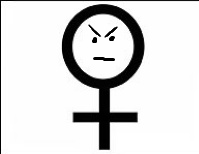
This is not a victory for feminism. The “feminist agenda” was never so simple as to just be pushing for putting more women in positions of power. Having more women in power within our current system will not change a thing.

Margaret Thatcher was not a victory for feminism. Giving Nadine Dorries a political platform is not a victory for feminism. Appointing Theresa May as Home Secretary is not a victory for feminism. All of these women are working or worked towards changing nothing, or making life actively worse for women. That they identified as women meant nothing.

The IMF is a corrupt institution, forcing countries to impose budgets which disproportionately negatively impact marginalised groups. For Lagarde’s appointment to be considered a victory for feminism, the IMF would need to change radically, becoming an institution which actively helped build and improve the lives of those who need the most help. This is unlikely to happen.

A victory for feminism is not simply placing a woman into power. Someone of any gender can actively strive to help make life just a bit better for women. Someone of any gender can fight for real equality. That is what a victory for feminism looks like.

A Glastonbury tale

I have eaten real food off a plate made of china and drunk tea from a mug. I have scrubbed my fingernails until the point of rawness; all traces of mud are gone. I have washed the faint stink of cowshit from my hair and skin. It is now time to tell a story about something that happened at Glastonbury.

It is not a cool, sexy story. The story I will tell does not involve a cocktail of psychedelic substances, or a celebrity encounter, or a clawing, sweaty, passionate fuck in a hot tent, or seeing the face of Thor appear in the sky to a soundtrack of tribal drums inside a stone circle.

It is not a disgusting story. The story I will tell does not involve a taxonomy of mud types, or running out of bog roll at a crucial moment, or dead Tories in portaloos, or pissing into a paper cup.

Some of those things actually happened.  They are not important stories.

The story I will tell is unglamorous, homely, even mundane. And that’s part of the problem.

On Sunday morning, I attended a debate in the Leftfield tent entitled “Equality and the Cuts”. It opened with the three speakers taking a few minutes to talk about equality issues: Laurie Penny spoke of how the cuts affect women, another of a successful campaign to allow deprived children the same opportunity to attend a nearby school as more privileged children, and the last of how the trade unions are engaging with equality issues.

After ten minutes, equality was never mentioned again, and the whole debate, thanks to questions from the audience, turned into the classic lefty infight: are trade unions A Good Thing?

That was it. Equality was ignored for the rest of the debate.

So much was left unsaid. Only the mere surface on the extent to which the cuts increase inequality was scratched. Women and deprived children had been discussed. What of, for example, people with disabilities who are facing horrendous cuts to a welfare state which helps them live a dignified life, while dribbling cockend Tory backbenchers declare they should work for less than minimum wage?

Why was there no discussion of the inequality and shit that exists in our own back garden, as foul as the squelchy brown lakes surrounding overflowing latrines? Being a woman and an activist is difficult when one’s opinion is not even taken particularly seriously by some male activists. How about the trade unions themselves? How are they looking in terms of equality? The left is still dominated by the voices of the privileged. Will this impede our ability to fight for equality for all? We are all under the umbrella of people fighting the cuts. We need to discuss how we practice equality. What is being done is generally little more than a sticking plaster over a gaping wound.

Some said that there was no need for debate, that everyone agrees that equality is good, the cuts are bad and that the cuts are going to disproportionately affect already disadvantaged groups in society. It is, perhaps, true that everyone inside that tent held that opinion, but this is not the general consensus. How can we work to get the message out and make people care?

We could have discussed whether the government was wilfully targeting the abjected, the deprived, the underprivileged. Do the Tories actually hate poor people, women, disabled people, travellers? Or are they just so fat on champagne and caviar that they have not noticed the lives they are destroying.

These questions buzzed through my head, yet I did not speak. In part, I was tired and inarticulate. In part, I did not want to interrupt the lively debate on trade unions in which everybody else was wholly engaged.

Even in a time slot dedicated for discussion of equality, the topic was the same thing I see so frequently on the left. It was talk of process, it was talk of theory. It was not talk of the actual issue at hand.

Discussion of equality isn’t cool or sexy. It isn’t even particularly interesting. It is, however, vital that we talk about it, as it is an integral part to rebuilding society into something that is, at the very least, more palatable than what we have now.

My Glastonbury tale does not include poo-pirates, spiritual experiences or sex, drugs and rock ‘n’ roll. It is unpretty. But it’s a talk that we need to have.


Revolutionary envy

As I write this, Athens is aflame with metaphorical revolutionary spirit, and literal fire from firebombs and the revolutionary tendency to burn stuff.

They call themselves the Αγανακτισμένων, the indignant. In parallel, the Spanish have the Indignados.

Greece and Spain are doing fairly well in terms of revolution. Srtiking images of crowds of people sick of the parasitic system they inhabit flood the news. Their efforts may prove futile in the future, but they are not without soul. It is a beautiful sight: a roiling mass of faces screaming against their masters. They have, for now at least, had enough.

Contrast with the British anti-cuts movement.

We are not indignant. We are a little bit pissed off.

There are those of us who care, of course there are. We are the ones who expressed disappointment at the failure of the March 26th marches. Some of us tried to occupy Trafalgar Square, imitating the Egyptian example. It seems to be working well in Greece and Spain, the occupation of public squares.

Our revolution is currently confined to interminable consensus meetings leading to small direct actions leading to arrests. We do not have the tipping point, where seemingly most of the population of a city runs riot through clouds of tear gas and smoke. We sit and listen to the same male voices drone about minor theoretical points.

Our “anti-cuts movement” lacks rage, lacks anger. Perhaps it is a by-product of British culture. Perhaps it is because the majority of British people see no reason to be furious.

We are not the indignant. We are the dry, the boring, the floundering; against something, but unemotional.

Is it time to become the Absolutely Fucking Livids?

Walking like a slut

Yesterday I participated in the London SlutWalk. To concisely summarise my experience of the day, it was fucking awesome.

I arrived at the assembly point at the top of Piccadilly in a foul mood, having been rained on and repeatedly betrayed by London Transport. As soon as I found the SlutWalkers, with hundreds of heart-shaped red balloons, my mood lifted and, in solipsistic pathetic fallacy, the sun emerged.

The turnout was large. The Torygraph estimated ‘hundreds’, the organisers 5000, and the Socialist Worker will likely declare a hundred thousand glorious comrades. I was right at the back, and would easily agree with the organisers that a reasonable number of thousands of people turned up.

It was a ragtag bunch. Old and young, people of all genders and races. We were all there for the same reason: we rejected the notion that a person is in any way to blame for their rape.

As we marched down Piccadilly, heartland of the capitalist plutocracy which feeds patriarchy and commodification of sex, we shouted a chant which summarised the purpose of the day:

‘Wherever we go, however we dress, no means no and yes means yes’.

It really is that simple to me. It really was that simple to my fellow SlutWalkers.

The mood was bright, jubilant, fun; positive and accepting. Here was a band of folk who did not judge and saw no reason to be afraid of their own clothes and sexual behaviour. Every banner reinforced the message: ‘RAPISTS! STOP RAPING!’; ‘A DRESS IS NOT CONSENT’; my personal favourite, the Flight Of The Conchords-inspired ‘A KISS IS NOT A CONTRACT’. This was not a day for reclaiming the word ‘slut’. Even the mainstream media seemed to get the message. We were marching against rape. We were marching against victim-blaming.

My mother called me today to express how proud she was of all of us.

Later, as we headed to the pub, feet sore from high heels, I was reminded of why we needed to have such a march. Being in the company of thousands who agreed that clothes were not an invitation, I had temporarily forgotten that the world was not yet on our side.

A leery, beery man took my friend’s SlutWalk outfit as an invitation to harass.

I shouted at him, loudly, copiously, swearily.

I sometimes wonder if all street harassment should be greeted with an angry assertion that this is not acceptable.

In all, though, it was a wonderful day, and clearly still needed. We must remain visible and vocal. We are chipping away at rape culture. Sluts and allies are everywhere, and we will be unstoppable.

“We need fewer women in politics”

These days, it seems that barely a day goes by without a politician saying something stupid or unpleasant. For example, this week Theresa May has given an interview to the Telegraph where she expresses some frighteningly McCarthayan views regarding Britishness and a veiled threat to those with radical politics.

There is a phenomenon which surrounds an unpleasant statement from a politician who happens to be a woman: some wag will invariably quip “and that’s why we need fewer women in politics”. Something similar happened with Nadine Dorries when she felt it would be appropriate to introduce a bill calling for abstinence education for girls only. The quip has been applied to Margaret Thatcher more times than she had closed mines.

Of course, it is almost always said in jest. The overwhelming majority of those who crack the tired joke do not really believe that half the population have no place whatsoever in politics. So why is this humourless feminazi so annoyed by a little joke?

This humourless feminazi is annoyed by a little joke as it taps so perfectly into a rather well-documented and incredibly irritating effect: attibuting to gender what can easily be attributed to being a dickhead.

Those who repeat the quip will declare that of course they are not sexist, and they genuinely do think that the number of women in politics should be no fewer than those that are already present. They still play directly into the hands of the system, though, and, like it or not, their quip is riddled with residual sexist attitudes and stereotypes.

Put simply, the idiocy and awfulness perpetrated by May, Dorries and Thatcher is almost completely nothing to do with their gender. What little can be attitributed to gender is that women in politics may be more likely to conform with the general consensus (laid down by a group of rich white men) due to stereotype threat. Much scholarly writing has also been dedicated to Margaret Thatcher’s performance of masculinity.

However, using dog-whistle racism to oppress, ruining sex education for a generation of young women, or destroying a country with neoliberal reforms is largely ungendered. Politicians do and say vile things all the time.

Where are the quips that Simon Hughes keeps abstaining from votes because he is a man? Where are the quips that we need fewer men in politics because Eric Pickles is determined to completely annihilate local public services? Why do we need any more men in politics when Andrew Lansley is in the process of cannibalising the NHS?

There are none. And this is because gender is irrelevant to what these politicians are doing. It is only called upon in women in a boring old joke because they are women and they are different and isn’t that funny that they’re doing politics, too?

If course we do not need fewer women in politics.

We need fewer dickheads in politics.

The war on choice escalates

It seems that the British war on choice has become a little less silent.

The placard-wavers are becoming more prominent. Many are British chapters of American anti-choice groups, their odious ideology wafting across the Atlantic to harass, intimidate and control.

They claim to be religious, holding “prayer vigils” accompanied by grotesque gory horror pictures. They control in the name of a God–the god who frequently oppresses women.

It is not surprising that they are here now, visibly imposing their twisted morals in which a woman is nothing but a walking womb.

Little information seems to be available about police reactions to these protests. It would appear that their involvement entails little more than mildly telling the anti-choice protesters to kindly move a little bit further away, despite such protests involving graphic imagery, filming of members of the public, and leafleting lies.

This seems curious, as left-wing activists are arrested for conspiracy to commit street theatre, banner-holding, or sitting down in a shop. One wonders just how much policing of protest has become an arm of the state; certainly, senior members of government are very interested in stripping away a woman’s right to choose.

The British war on choice is no longer silent. It is building towards a full-scale battle. It is now time to fight.

It speaks!: on being a woman and an activist

I protest quite a bit. Sometimes I march. Sometimes I charge around with a megaphone. Sometimes I commit acts of aggravated sitting or aggravated banner waving or other aggravated perfectly legal activities. Sometimes I might get a little stubborn about melted cheese on my food and throw a bit of a strop.

I protest quite a bit.

I also happen to be a woman. A cis, somewhat femme woman.

In a perfectly gender-neutral, equal society in which women are viewed as people rather than objects, these two facts should be entirely unrelated. This is the world I am fighting to build. It is not a world we inhabit.

The media tend to view women who protest as something of an anomaly: a fascinating creature to be documented and photographed meticulously. A particularly striking example of this is this Daily Mail article [clean link; they will not be getting the clicks they crave] which mixes images of “riot porn” with young women, breathlessly commenting on how exciting and new it is that girls are worrying their pretty little heads with politics. The images are strikingly similar to the annual newspaper feeding frenzy of printing pictures of girls celebrating their A Level results, which tend to imply that the route to four As at A Level is to appear female and jump a lot. Many of the photo collections of actions feature a young woman holding a placard or shouting as their front page, reducing the message of the protest down to”you’re cute when you’re angry”. These photographs are invariable captioned “a female protester joins in”.

From personal experience, this is because photographers tend to gravitate towards the women, buzzing like wasps at a jam sandwich. I recall one instance in which a photographer lay down on the floor in front of me, attempting an upskirt shot. A comrade of mine once attracted the attention of a particular photographer, who spent the entire action taking close up pictures of her face and breasts. Another comrade is prominently featured in the photosets of every action she has ever attended.

These women are intelligent, articulate, opinionated and angry, and yet their participation is reduced to little more than a bit of cheap eye candy.

Then there are the trolls: an example of this is the overt misogyny in criticism of articles written by journalist Laurie Penny, who happens to be a young woman. These criticisms are rarely related to the content of her writing, or even to her politics, but, rather a stinking mire of hatred, much of it focused on her gender, including calls for her to be raped and an obsessive deconstruction of her looks.

I have experienced this to a much, much smaller extent on Twitter. Members of the EDL have a fondness for talking about my breasts rather than responding to the fact that I called them a bunch of fucking fascists.

The objectification of women is not merely external, though. Some of it comes from our own back garden.

I have expressed my frustration before that the dominant voices in consensus meetings tend to be male. This can sometimes trickle down into actions.

On more than one occasion, I have heard a frantic whisper ripple through the group:

“Can we have a woman talk on the megaphone?”

On more than one occasion, I have heard this succeeded by:

“We don’t want it looking like it’s all blokes. It doesn’t matter what you say. We just need a woman to speak.”

Before I stopped worrying and learned to love the megaphone, a part of me believed that perhaps this should be the extent of my participation in a protest planned by someone else. These days, I have no such qualms, and that megaphone will be pried from my cold, dead hand.

At the back of my mind, though, I still fear that my words are less important than my gender to the media and some of my comrades.

In the comments to my post on decision making among activists, it was noted that male privilege can sometimes be left unchecked. I have some comrades who identify as feminists, but their behaviour is far from it. They are not misogynistic, rather, they display benevolent sexism.

When I speak with them, I see a look cross their faces of bewilderment mixed with paternalistic delight.

It speaks, they seem to silently say. Isn’t that sweet?

I believe this to be the crux of all of these experiences: the photogenicity of woman activists, the resorts to misogyny rather than political debate, the manarchists finding opinions coming from a woman more adorable than valid.

It speaks. 

We are still lumbered with the belief that women should be seen but not heard, that we are objects rather than people. Our opinions, therefore, are less worthy. Even among those leading the charge for social change, there is unchecked privilege, which, in the unlikely event of a revolution, would mean building a world in which a woman’s opinion is still novel and surprising.

These attitudes need to be destroyed. Benevolent sexism is as dangerous as hostile sexism.

An angry woman is not cute. An angry woman is a person. It speaks. Why should this be exceptional?
How to liven up something dull with a flash of knickers

I honestly don’t know where to begin with this. The Badminton World Federation has decided that women must play the sport in skirts or dresses. If they wish to wear trousers or shorts, they must wear a skirt over this.

Their rationale for doing this?

Interest is declining, Rangsikitpho said, adding that some women compete in oversize shorts and long pants and appear “baggy, almost like men.”

“Hardly anybody is watching,” he said. “TV ratings are down. We want to build them up to where they should be. They play quite well. We want them to look nicer on the court and have more marketing value for themselves. I’m surprised we got a lot of criticism.”

As tweeter @HelenWayte put it,

They’re also essentially saying that their sport is so dull it’s only worth watching to get a glimpse of lady pants. That’s sad!

This is a good point well made. Badminton is one of the more boring of the sports, and there certainly seems to be a good case for saying that this regulation may have been brought in to appeal to the male gaze. This is the executive committee and council of the Badminton World Federation. All of the executive positions are filled by men, and only two of the fifteen council seats are filled by women. Providing a little bit of eye-candy in the form of a woman in a short skirt jumping so her knickers are sometimes visible may be appealing to this set of very enthusiastic badminton fans.

There is more to be angry about in this story, though, above and beyond the rather transparent motivation to spice up a cripplingly tedious sport with some lady-legs and lady-bums.

First of all, badminton is a popular sport on Muslim countries. Muslim women who play badminton will be subject to the new dress code, despite cultural concerns about modesty. They will be permitted to compete wearing trousers under their skirts, but this addition of extra layers will almost certainly impede motion, giving some athletes a disadvantage in the game. This is therefore discrimination, even if the Badminton World Federation say it’s not.

Secondly, it furthers the distinction between “sports” and “women’s sports”. This regulation applies to “Women’s Badminton”. Likewise, we see “Women’s Football”, as distinct from “Football”; “Women’s Rugby” as distinct from “Rugby” and so forth. There are women’s sports and there are proper sports.

Apparently, we only need to care about women’s sports if we can get a good look at their pants.

Finally, the big gun. Rarely has the relationship between women performing femininity for the male gaze and capitalism been made more explicit. Attracting corporate sponsorship is overtly given as part of the rationale behind bringing in the dress code. It is clearly stated that the Badminton World Federation hope that by dressing up women in pretty little skirts will bring in better “marketing opportunities”. Being sexy is lucrative. The corporations will want to capitalise on a potential panty peek.

There are opportunities to subvert, and I offer some suggestions to badminton players who are outraged by the new dress code.

Imagine women badminton players refusing to play in the short skirts expected, instead covering up in full maxi-dresses. Let us see how long the Badminton World Federation would allow women to play without being sexy.

Imagine women badminton players denying the world a cheeky glimpse of their knickers, instead choosing to go without, offering up a sight of a cunt with a hairy, lustrous, full bush. Let us see how long the Badminton World Federation would allow the offensive view of a woman’s genitals to continue.

Imagine if men who played badminton chose to stand in solidarity with their sisters, opting to play in skirts. Let us see how long the Badminton World Federation would allow such blatant flouting of gender expectations.

Badminton is dull, and the addition of the tired standards of female sexiness will do nothing to remedy this.

Imagine if any of the above happened. Suddenly badminton would become interesting–but a lot less profitable.

The British war on choice: silent but deadly

I always associated the war on choice with the US, where abortion rights are gradually eroded–women are forced to jump through hoops to gain access to a legal procedure in a perpetually-narrowing window of time.

While decrying the American war on choice, I failed to notice the quieter war on choice happening in our own back garden.

The British war on choice is, like all British equivalents of American phenomena, far more subtle. There is very little placard-waving and harassment outside our abortion clinics. We do not see the level of violent crime committed against providers. Our churches are quieter about the matter, for the church has less sway in the UK.

It is happening.

Despite the fact that Parliament consistently votes against attempts to erode a woman’s right to choose, there are some who are utterly determined to push their agenda.

The disappointingly-not-raptured Nadine Dorries appears leading the charge, though she has the full backing of the Prime Minister.

The claims rear up again and again: anecdotal and emotive stories, couched in bad science, rather than evidence and data. There is no causal relationship between abortion and negative outcomes on mental health. Abortion is not linked to breast cancer. 24 weeks is not particularly viable.

The votes to reduce the abortion limit fail, and so different tactics are attempted. Dorries is currently spearheading a campaign called “Right To Know“, which makes the reasonable-sounding suggestion that women should be given information before they have an abortion. The information, though, are the shaky myths outlined above. It’s a baby. You’ll go mad and get cancer and have your tits cut off if you have an abortion. It is a tactic which is widely-used in the US as an attempt to restrict access to abortion.

Then there is this. Put succinctly, an anti-choice group has been invited to join a newly-created advisory committee on sexual health, while the evidence-based advisory-group veterans British Pregnancy Advisory Service have been snubbed.  The original advisory committee, the Independent Advisory Group on Sexual Health and HIV was disbanded in the “bonfire of the quangos“. Its replacement seems somewhat less interested in evidence and more interested in pushing an agenda. This is hardly surprising behaviour–governments have a nasty tendency to get rid of advisers who do not give them the advice they desire.

LIFE, the anti-choice group in question, has some decidedly bizarre views on sexual health. They advocate use of the rhythm method of contraception, which has no effect on STI prevention and very little on pregnancy prevention (despite what the evidence-free table published may say). LIFE provide “educational materials” which do not even bother repeating the shaky scientific claims the anti-choice brigade tend to use, instead going for flat-out “IT’S A BABY, YOU UTTER MONSTER” propaganda. Rather than test the efficacy of their education programme, LIFE provide testimonials in support of themselves.

This evidence-averse group is advising policy: policy regarding a medical issue. They appear to have no knowledge, merely an agenda which is similar to that of the Prime Minister.

The British war on choice is barely perceptible. It permeates quietly throughout the fabric of the legal system, affecting care and bodily autonomy. As it drifts past, largely unnoticed we need to call attention it out. There is something noxious in the air. It will hit you sooner or later.

Justifying the system: why do disadvantaged people believe the game isn’t rigged?

Why do some people continue to believe that the system is fair, that this is a meritocracy, that they can win? Why do they fail to see the system as I do?

Intuitively, one would believe that those for whom the system doesn’t work–those in marginalised groups–would be those who express the most rage at the system. In fact, the converse is true: for example, people from economically deprived groups often believe capitalism to be fair and good, rejecting socialism. There is also a strong bias towards believing that profitable companies are more ethical than non-profitable companies, despite the opposite being true. Stereotypes flourish: black people are lazy and that is why they can’t get jobs; Polish people work insane hours and that is how they are stealing all our jobs. People will vote for political parties that do not represent them: for example, many economically deprived people vote for parties that endorse neoliberal ideologies, destroying services they access in favour of the pursuit of profit.

This seeming anomaly is explained by a psychological theory: System Justification Theory.

System Justification Theory posits that people are motivated to perceive the world around them as fair, that even though they themselves may be receiving the thin end of the wedge, the system is inherently just. This happens because people want to believe that the world is predictable, giving a sense of certainty and stability. Due to this motivation, people fall over themselves to justify the system.

It is comforting to believe that everything makes sense, and that the world isn’t all fucked up and crooked. It is more comforting to believe that people are poor because they don’t work hard enough, and they’re happier poor, anyway. It is more comforting to believe that women who are raped had probably done something wrong or deserved it–rather that than believe it could happen to anyone. It is easy to believe that immigrants are to blame for unemployment than it is to believe a corrupt capitalist system is streamlining the number of jobs to maximise profits.

System justification increases when people are thinking about their own mortality, or when they believe the world is not a safe place. Threats of terrorism and crime increase people’s belief in system-justifying ideologies.

I, of course, get frustrated when I see other people justifying a system which I believe to be unjust (though that may be because people who do not endorse system-justifying ideologies display higher levels of anger and frustration). However, there are consequences to system justification beyond me being a bit angry.

Psychologically, people who endorse system-justifying ideologies are happier and more satisfied with life, and less angry and frustrated, across the board. For advantaged people, additional benefits emerge: those who endorse system-justifying ideologies have higher levels of self-esteem and feel a greater sense of solidarity with people from similar social groups. For disadvantaged groups, the opposite is true: self-esteem is lower, and there is less solidarity with similar individuals.

Increased system justification also leads to increased perceptions of legitimacy of governments and institutions, and decreased support for social change: in other words, system justification may help maintain a fundamentally unjust and broken system.

Put together, it is unsurprising that very few class revolutions or civil rights movements are successful with the strong psychological barriers in the way.

Real-world implications of system justification have been measured with regards to beliefs about climate change and behaviours to protect the environment. In this study (unfortunately, paywalled), it was found that system justification led to climate change denial and a reduction in environmentally protective behaviours such as recycling.

The authors of the study then attempted to work with system-justifying beliefs to attempt to encourage environmentally protective behaviours, by informing participants that such behaviours were vital for protecting their way of life, and it was therefore patriotic. This had the desired effect: people changed their behaviour.

Such “system-sanctioned change” may represent a way of counteracting some of the negative effects of justifying the system, but it is difficult to see how it can have an effect on stereotyping and prejudice and building an altogether fairer society.

It is frustrating and anger-inducing to be unable to justify the system. I have enough rage, though, that I wish to see an end to hierarchical power structures. It keeps me fighting.